Friday, 23 March 2018

No Kane, No Lukaku: The Home Straight


Ah, the international break. An FPL player’s nightmare, but an FPL blogger’s dream. Plenty of spare time in which to reflect upon the game, sites that need to bulk out their content and a bored audience who would be willing to read essentially anything fantasy-related. All of this makes it the perfect time to return with another ‘no Kane, no Lukaku’ update.


For those who have not been following this mini-series, the premise is that I will go the whole season without bringing in either Kane or Lukaku, the two players considered by many to be must-haves at the start of the campaign. The league is now reaching the business end, and so far I have stayed true to my word – many a Kane goal-fest has burned me, and on occasion Lukaku has punished his non-owners, but on the whole things have gone surprisingly well. Better than most of my previous seasons, in fact. My overall rank has recently broken the 100k mark, which is by all accounts a handy position to be in as we enter the final seven gameweeks. A significant reason for this is Mo Salah. He would be a hero even without the fantasy points he has showered down upon me, as he has fired my beloved Liverpool to a new level, but this extra plus point has elevated him to god status. Of course, anyone with any sense has the Egyptian at this point – captaining him, however, was far from a foregone conclusion until quite recently. The temptation of Kane proved too strong for many of the managers who had the English marksman; this paid dividends for them on occasion, but the sheer consistency of Salah’s returns have ensured that my captain has done well for weeks on end.

 
This brings us on to the most significant recent development as far as the strategy is concerned. I refer to Harry Kane’s injury. On one hand, it represents great news: for the foreseeable future, there will be no more watching Spurs from behind the sofa, and the one player always responsible for pegging back my progress in mini-leagues is out of the picture. However, if anything, the drawbacks are more significant. Kane owners are scrambling to sell, and with no obvious like-for-like replacements their budget is being spread more evenly across the squad. This means a lot of my differentials are getting snapped up, leaving me with little room to make ground on rivals. The price rises are nice – Firmino is now a staggering 1.3 million more than when I bought him - but they don’t directly translate to points. Meanwhile, those who are looking to swap Kane for something resembling an equivalent are bound to turn to Lukaku. The Belgian is re-finding his form, and Manchester United have some very nice fixtures coming up: many more FPL opponents are ready to take advantage of this now he has taken the ‘Kane’ slot in so many squads. In other words, it will simply be the United scores that I dread to check rather than those of Tottenham. It will be far from straightforward retaining a place in the top hundred-thousand during this run-in.


This is particularly true given the double gameweeks that have to be navigated. In terms of chips, I am in relatively good shape – I opted to use the free hit to deal with blank gameweek 31, and was rewarded with a 105-point haul, but the other chips remain available to use. The squad has been honed for many weeks to ensure that all fifteen are getting regular minutes, and that most have a double gameweek: the bench boost or the triple captain are thus ripe to be played in gameweek 34, with the remaining chip being saved for the next double gameweek in 37. Salah’s lack of a double poses something of a dilemma: anyone would think twice about not giving him the armband, and given that he has been so integral in allowing me to remain competitive without Kane it would be tough to give the triple captaincy to anybody else. However, other big hitters who will have an extra game in the week are hard to ignore – chief amongst these is the newly-acquired Heung-Min Son, who is leading the line for Spurs during Kane's absence. I currently sit second in both of my main mini-leagues: getting the triple captaincy right (or wrong) could make or break the entire season. On the plus side, Kane no longer being an option for my opponents, unless they choose to gamble on his late-season fitness, is something of a relief.   


A big perk of the strategy has been the ready availability of funds to invest in the midfield, where there have been multiple premium options producing high points returns. For the final few weeks, I have taken a punt on Mkhitaryan. As mentioned, I have ground to make up in my mini-leagues: his decent form of late, Arsenal’s seemingly endless capacity to start performing well when they no longer have anything to play for and their very kind fixture list made this a gamble I was eager to take. There is the risk of Europa League-induced rotation, which made the ineligible Aubameyang the more tempting option in many ways, but Vardy’s similarly nice run-in made me reluctant to sell him. Thus, my hopes are pinned on the Armenian. In my eagerness to execute this plan, I made my transfers before realising that the international break was imminent – there is now a nervous wait to see whether he or Son get injured while playing for their countries. This was foolish, but the strategy on the whole has proved surprisingly sensible: with any luck, I’ll be able to limp over the line with an overall rank with which I can be pleased.

- @JamesMartin013

Friday, 16 March 2018

Weekend Preview


It’s a limited Premier League schedule this weekend due to the FA Cup fixtures, but there are still plenty of games to get excited about both domestically and abroad. Leagues and knockout competitions alike are approaching the business end – the so-called ‘must-win’ matches are coming thick and fast.


One of the league games that does go ahead in England is Liverpool vs Watford. This should be well worth a watch. Notwithstanding the disappointing defeat to bitter rivals Manchester United, the hosts are in scintillating goal-scoring form. Salah continues to go from strength to strength in his debut season on Merseyside, and Sadio Mane appears to be emerging from his mini-slump just in time to help the team’s efforts to secure a place in the top four. Javi Gracia has steadied the ship at Watford since taking charge, but defensive frailties are still clear for all to see: Arsenal were able to expose these last weekend, putting three past the Hornets defence. It would not be a surprise if Liverpool were able to match or better this tally. However, the visitors are also capable of finding the net – Klopp’s men found this out in the 3-3 draw on the opening day. A repeat of such a scoreline is clearly unlikely, but a high-scoring fixture seems all but guaranteed.


The FA Cup also offers some interesting match-ups. The pick of these is probably Chelsea vs Leicester. The home side are looking to bounce back following the disappointment of being knocked out of the Champions League; Leicester are no Barcelona, but they might well fancy their chances of capitalising on the vulnerability of their opponents. Conte’s men actually played quite well against the Catalan side, but were undone by multiple moments of sloppiness at the back – few forwards are better-equipped to pounce on errors than Jamie Vardy. However, barring a rout against a woeful West Brom side last weekend, Leicester have not been in great form. Chelsea will undoubtedly feel they can at least manage to score against The Foxes; a performance anything like the one that they produced midweek would probably be enough to see them through to the semi-finals, potentially giving Conte a slight hope of redemption. Given Chelsea’s exit from all other competitions and unsatisfactory league position, a loss might prove to be the final nail in the coffin.


Further afield, Real Madrid vs Girona could prove to be a fascinating fixture. At the start of the season, such a statement would have sounded absurd – a walkover would have been considered essentially a given. This is still a possibility, of course: it was not long ago that the newly-promoted side were comprehensively dismantled by six goals to one against Barcelona. However, since then they have produced three straight impressive wins. Celta Vigo, Villareal and Deportivo have all been brushed aside, leaving Pablo Machín’s side in seventh place. Their opponents are only four places higher, in third; there is a danger of dropping down to fourth if Zidane cannot orchestrate a win in this match. This would leave a campaign that is already highly disappointing for Los Blancos on the brink of becoming disastrous. Girona, meanwhile, could move as high as fifth. To occupy a Europa League spot at such a late stage would be a huge accomplishment for the team playing their first ever season in the Spanish top flight. Real probably have enough to see off their challenge, but it is unlikely to be straightforward.


The final pick comes from Serie A, where Inter Milan travel to Sampdoria. The two teams are embroiled in fights for Champions League and Europa League qualification respectively, making this a massive game for both clubs. Inter are looking to capitalise on their game in hand over Lazio to move into fourth place – to do so, they must win. A victory for Sampdoria, on the other hand, would propel them above Inter’s city rivals into sixth place, just five points behind Inter themselves. The Milan side managed an impressive draw with high-flying Napoli last time out, putting a serious dent in Sarri’s title hopes, and will be confident of continuing that good form in this game. Sampdoria, by contrast, are looking to bounce back from a surprise drubbing at the hands of relegation-threatened Crotone, to whom they lost 4-1. Another loss here may well effectively end a campaign that had shown such promise. This may consequently be something of a cagey affair, and ultimately it seems likely that Inter will come out on top.

Tuesday, 6 March 2018

Liverpool: Klopp’s Long Game


Lately, something feels different around Liverpool Football Club. It is not just that performances are improving – although it is clear that they are. The steps being taken feel somehow measured. Since Klopp’s arrival at the helm, there has been a sense that a dial is being incrementally cranked up; it is at times so imperceptible as to prompt pundits to ask if there has been progress at the club at all, but taking a step back and looking at the holistic picture reveals that everything is definitely moving in the right direction. In the past, flirtations with success came about through individual brilliance: 2013/14 was the last genuine title charge, and it was spearheaded by the mercurial Luis Suarez. He tried to haul the team along with him in one great leap – as is so often the case with such things, he fell just short. Now, Philippe Coutinho has come and gone, and yet the steady march forward continues. Step by step. Qualification for the Champions League in consecutive seasons looks very possible for the first time in a decade. Meanwhile, in the current season’s competition, Liverpool are alive and kicking after a decimation of Porto in the round of sixteen. Long-term faults are being looked at and, when the right personnel become available, addressed. In short, a dynasty is being rebuilt from the ground upwards.


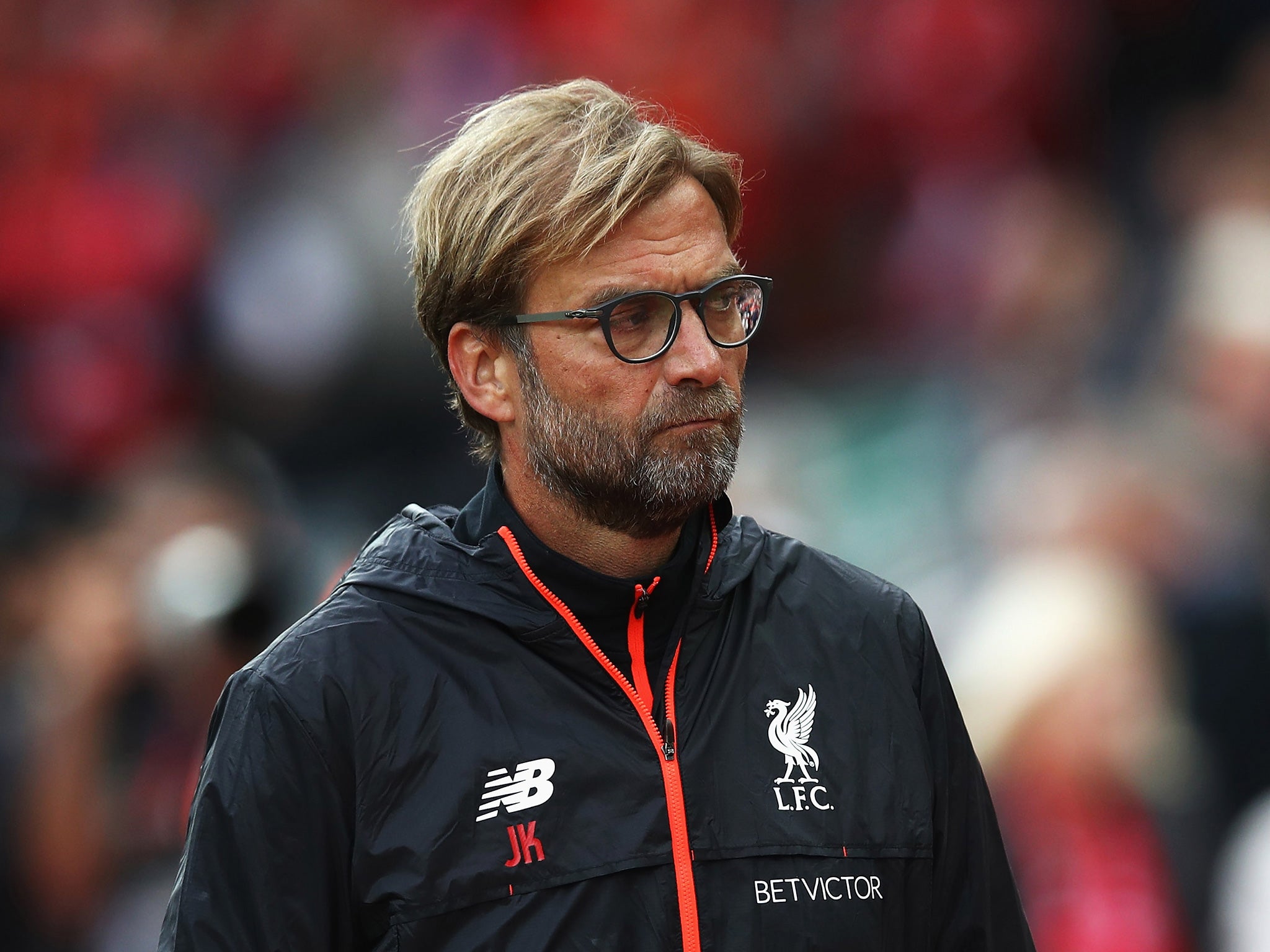
Part of the excitement when Klopp took charge at Anfield was down to the fact that he is known for being a manager that commits to a project. Particularly in the modern game, his record makes good reading for a club that needs to be given a long-term direction. Mainz: seven years. Borussia Dortmund: seven years. The hope was that he might commit to such a stint on Merseyside, taking the time to shape a team in his image and ultimately restore the club to something like its former self. This is a process that is now well underway. For some while, however, there was much consternation amongst the fans – Klopp seemed content to work with what he had at the start of his tenure. He was instilling his philosophy, yes, but with a squad that many felt was operating at close to its full potential. Lots of fans turned against the owners while looking for answers to their questions: the absence of ‘Klopp signings’ seemed to make no sense unless it was a question of availability of funds. As Liverpool stumbled to 8th in the 2015/16 season, the only addition being a January loan of Steven Caulker, some had started to worry that they were facing yet another false dawn.


It takes time for the sun to rise, however. Time has revealed that a ‘Klopp signing’ is not all about finding someone with certain attributes desirable in a high-intensity system; it is about singling out individuals who the manager believes will make the biggest impact on his squad, and doing everything possible to secure the signatures of these players. Such a process takes time, and can result in frustration; the failure to acquire Van Dijk in the summer led to a further six months of a defence not really good enough to compete at the highest levels. However, this modus operandi is part of the package with Klopp. His perspective is longer than one transfer window, or indeed one season – he knew that the Dutchman was the man for the job, and refused to settle. Sure enough, in the few games he has played since finally signing in January, Van Dijk has started to show he was worth the wait. Similarly, Naby Keita could only be acquired for next season during the summer attempts to bring him to the club. Klopp was content with this – why would he not be, when one season is such a small price to pay in exchange for another piece in the puzzle that is Liverpool’s attempt to return to the very top?


In any case, faith in the current squad is central to Klopp’s attitude – it would be false to say that Klopp in any way ‘sacrificed’ this season in his pursuit of longer-term goals. That is not to suggest he refuses to acknowledge that there could be improvements, but his faith in his tactical system is overriding. He knows, of course, that the right breed of great players will thrive in his gegenpress even more, but in the meantime all he can ask of his team is to put in the effort. This is 90% of the formula – be prepared to run, get in the faces of the opposition in their own third, and try to prompt turnovers that produce chances anybody could finish off. This is an ethos as much as it is a tactic: naturally, it takes a while to become ingrained in a team. Liverpool are reaching that stage now, and it is no coincidence that consistency is slowly improving. There was out-and-out panic when Coutinho was sold and not replaced, with many envisaging a January collapse of the sort that saw Liverpool’s dream of a title crushed before it had really formed last season. Instead, results have actually picked up. Miraculous, no? Far from it. This is no act of God, but an act of Klopp; every member of the squad knows what is expected when they are called upon, and though they may not have the inspirational qualities of the Brazilian maestro, they have an unwavering understanding of what must be done to succeed in the German’s setup. Alex Oxlade-Chamberlain is a fine example. He left Arsenal hungry for guidance: no doubt fearful of following in the footsteps of Theo Walcott, who burst onto the scene but then stagnated under Wenger’s tutelage, he forced a move away. He has absorbed his new manager’s instructions, becoming a blank slate upon which Klopp can make his mark. As a result, he has been a major asset. In some ways he plays second fiddle to the likes of Mohamed Salah and Roberto Firmino, who steal all of the headlines, but in a more fundamental sense he is one of many equal parts all striving for a common goal.


Where next for this march of progress, and where might it end up? Optimism is rife around Anfield, and rightly so: almost without anybody noticing, Klopp has brought his squad to the brink of greatness. A world-class goalkeeper and a new midfielder would be enough to mount a title challenge in the next campaign; add another top-level centre-back into the mix, and there is potential to become a dominant force. Of course, in embracing Klopp, one must accept that these additions will not be made unless the right people can be brought in – the names floating around are tantalising, particularly Alisson of Roma, but ultimately there has to be faith in the manager’s decisions. That said, the very existence of the rumours suggests that he has identified the remaining problem areas, and feels that the time has come to find the people to address them. These are exciting times to be a Liverpool fan, and for once the groundwork has been laid to ensure that the excitement only continues to grow in the coming years. 

Monday, 5 March 2018

Poppies, Ribbons and Political Neutrality in Football

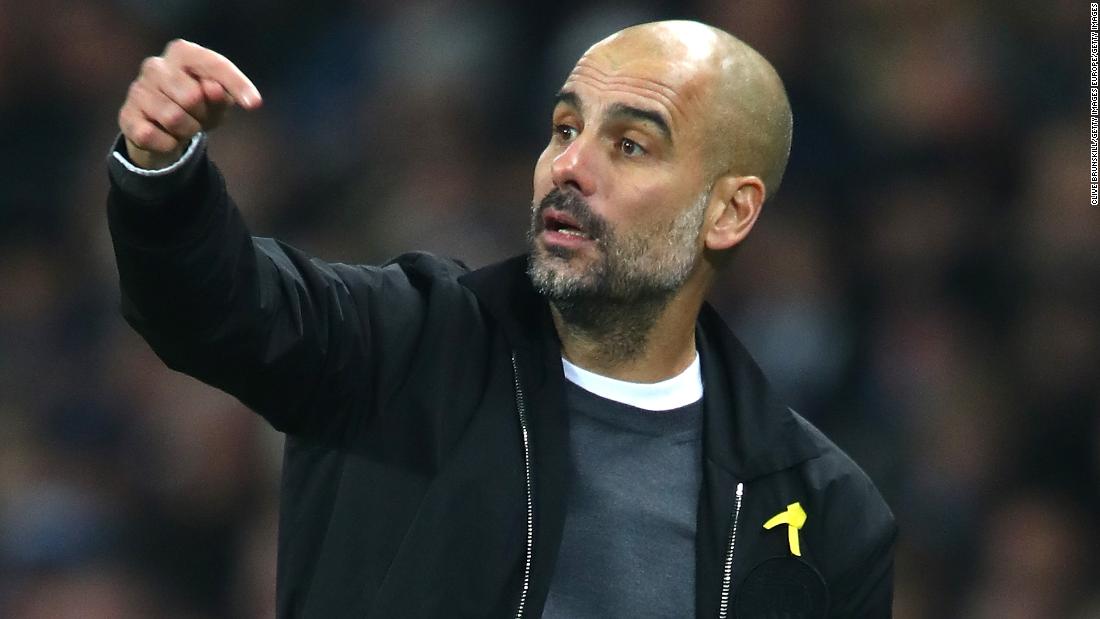
In the context of legal philosophy, Ronald Dworkin argued that characterising a question as either related or unrelated to morality necessarily involves taking a moral position. Setting the boundaries of the question cannot be entirely separated from providing some sort of answer to that question. Perhaps surprisingly, this jurisprudential debate has recently become of relevance to The Football Association, albeit in a slightly modified form, in relation to Pep Guardiola’s ribbon in support of Catalan independence.

The FA are understandably eager to frame their opposition to the Manchester City manager’s ribbon as a simple manifestation of their rule against political statements. However, it is far from clear that such a blanket ban is in place. Not only does the chief English footballing body allow poppies to be displayed on shirts, it famously defied FIFA over the national team’s right to do so in late 2016. It is understandable why they argue that the symbol is not a political one; the poppy undoubtedly has its roots in a simple act of remembrance for those that gave their lives in the two World Wars. Even this is not straightforwardly unpolitical, but assuming that it can be so construed it is nonetheless apparent that the poppy now represents more than this. The Royal British Legion lists a host of recent conflicts in the ‘what we remember’ section of their website – one need only look to James McClean’s principled opposition to the poppy to understand that not all such military activities have been free of controversy. The symbol has therefore unavoidably taken on some kind of political significance.


The issue of independence, one might argue, is different in that it is not an apolitical issue that has been in some sense co-opted: the fight for Catalan independence is an inherently political movement. This may be true, but upon listening to Guardiola’s reasons for wearing the ribbon it is hard to sustain such an argument. In his understated but dignified explanation as to why he is choosing to ignore the FA and risk a touchline ban, he brought attention to the political prisoners who remain incarcerated after pushing for independence. At its core, this is a humanitarian issue – protesting an attack on freedom of expression is possibly less of a political position than implicitly supporting the actions of the British military, and it is certainly less of a controversial position. The cultural acceptance of the poppy, and its tie-in with the idea of patriotic values, are not reasons for calling it apolitical: in making such a judgement, the FA are unavoidably endorsing the political sentiment behind the poppy. In fact, they are endorsing it all the more thoroughly by refusing to even acknowledge that there are political issues at stake. The distance and ‘foreignness’ of the Catalan debate has allowed them to more easily conclude that Guardiola’s ribbon is political, in so doing impliedly casting aspersions on the validity of the cause while maintaining the guise of neutrality.


Perhaps it would be better to do away with the idea of keeping politics out of football altogether. The corporate money being pumped into the game is already causing something of a disconnect between clubs and their local fans; the idea that rules should be imposed to sever teams from their city’s culture and history once and for all is far from appealing. Take Liverpool. The city has a rich socialist history, and icons of the club such as Bill Shankly espoused a footballing ethos that reflected these values. Can it really be beneficial to enforce a kind of bland light entertainment status on football? Things such as bumper television deals and the introduction of VAR are already moving the game in this unwelcome direction, and the change should be resisted. Shankly’s oft-quoted words about football being more important than a matter of life and death were not meant to convey that winning or losing is everything. Quite the opposite: the cultural phenomenon of football, involving far more than just the games being played out on the pitch, was all-encompassing, embracing entire ideologies. This is being stripped away, and rules against political statements are a part of this.


To return to Dworkin’s idea, it seems clear that the FA’s rejection of the poppy as a question of politics is in itself a political position. By extension, so too is their classification of the Catalan independence ribbon as a political symbol – the very categorisation serves to call its legitimacy into question. This may be right, or it may be wrong, but however much the FA may want it to be it is far from neutral.

Friday, 16 February 2018

Diamonds are Forever: Why Liverpool Need to Revert to an Old Tactic

One of the hallmarks of Liverpool’s barnstorming 2013/14 season was the narrow 4-4-2 diamond adopted by Brendan Rodgers. Since Klopp has taken charge, this has given way to at least a notional 4-3-3; in recent weeks Mohamed Salah has become something of a de facto striker, but the line-up is nonetheless still two players who are traditionally wingers operating alongside a forward. Klopp’s tenure has by no means been unsuccessful – the fact that the team are in the Champions League knockout rounds for the first time since 2009 is testament to this – but goals have sometimes been a little harder to come by than they were in the peak season under Rodgers. This is of course partly attributable to the then-available talents of Luis Suarez and Daniel Sturridge, but the formation plays its part too. Liverpool’s current front line is at the very least comparable with the duo of Suarez and Sturridge, which is in itself a high compliment indeed, but they can nonetheless sometimes struggle against the low block. It could be worth experimenting with the narrow diamond once more against teams that like to try and frustrate Liverpool in this way. 


What are the advantages of such a formation? Essentially, it forces the team using it to play narrow – none of the attacking options are wide players, so forward play is channelled through the middle of the pitch. This means that the only way into the box is through intricate passing combinations. All too often, Liverpool have been lured out wide by the available space and then launched in aimless crosses: this does not play to the strengths of their forwards, who are not target men, and generally does not produce results. It would be preferable if they remained patient, moving the ball around in the centre until gaps are prised open. It is then a case of picking that gap and finding a runner, who is duly free of the low block. It requires a fairly high level of technical expertise, and an even higher level of discipline, but once it is drilled into the players it produces results far more reliably than slinging in crosses. It would be doing the current crop of central players a disservice to presume they are not capable of excelling in such a system. It may well get the best out of the technically-gifted Gini Wijnaldum. Henderson, too, is a good passer of the ball – one of the biggest complaints against him is that he likes to shift it sideways, so removing this option may actually help him. Can’s strengths lie in positive driving runs, which can also serve to open up a bit of space to pick the right pass: in short, the central options seem well-suited to the narrow diamond.


In terms of Liverpool’s current attacking personnel, however, the suggestion of this formation seems strange. The only regular first-team player who is generally classified as a striker is Roberto Firmino. The formation requires two forwards, and leaves no room for wide attackers – thus one of Mane or Salah has to play up front, with the other possibly missing out altogether. As mentioned, however, Salah is effectively playing as a striker anyway. There is no doubt that the Egyptian would continue to thrive in the proposed setup, as it would not substantially alter his role. The issue with leaving out Mane is less easily resolved. There are effectively two solutions: accept that he has to be sacrificed in order to reap the benefits of the narrow diamond against lesser teams, or else play him up front with Salah and drop Firmino into the number 10 role. Neither are necessarily ideal. Mane hasn’t had the best of seasons by his standards, but still brings enough to the team to warrant reluctance to drop him. Firmino, by contrast, has been a revelation up front, to the point where shifting him deeper seems counter-productive. However, part of his brilliance has been his ability to create for others – there is no reason to think that he could not continue to excel when playing behind two strikers, even though his output might take something of a hit. It may be worth at least trying it, so as to try and find the key to consistently unlocking low blocks.


This solution is particularly appealing when Liverpool’s full-backs are considered. Moreno and Robertson are the options at left-back, with Gomez and Alexander-Arnold the available options on the other side: of these, three would properly be classified as attacking full-backs. Only Gomez, who is a natural centre-back, is more conservative. Games where this formation would be most useful are against teams that set up with little attacking intent; there is therefore no issue in picking two of the offensive-minded full-backs. Width is duly provided, even though the formation does not involve any wide attackers. The whole point of the tactical setup is that the team are not constantly looking to the wing, but these full-backs at least provide an out-ball as a worst-case scenario in order to prevent turnovers of possession. Some form of in-game tactical flexibility is also maintained. If it comes to it, Liverpool’s full-backs all have a decent delivery on them, and are capable of picking out someone like Solanke if Klopp truly feels that the block cannot be broken down in any other way. Again, this must be considered a last resort, as the entire point of utilising the diamond is to find more reliable and repeatable ways through a deep line. Nonetheless, the fact that this tactical alternative remains removes a fairly significant criticism that might be levelled at the formation.


Thus, it seems like it might at least be worth experimenting with a return to the diamond that characterised Rodgers’ tenure when it comes to games against opponents determined to sit deep. It is not so radical a change from the current setup that it will unduly affect the team’s prospects in the short-term, but it helps to ensure that the players do not constantly funnel the ball out wide when faced with pressure in the middle. It could serve to bring the best out of the current crop of central midfielders, and the multi-talented forwards should be able to adapt to it. All of this is supported by the attacking full-backs, who ensure that at least some wide threat is maintained.   

- Follow me on Twitter @JamesMartin013

Monday, 12 February 2018

Southampton 0-2 Liverpool: Post-Match Analysis


Despite being some way off their scintillating best, Liverpool were able to stroll past Southampton without any significant problems. Nobody epitomised the cool control more than Virgil Van Dijk, who put in a supremely composed performance against his former club to help secure the clean sheet. At the other end, Firmino and Salah combined twice in the first half to get the goals. More should probably have been added, but ultimately the lead never looked in any real danger.


Southampton have become something of a thorn in Liverpool’s side in recent times, shutting them out four times in the previous five meetings prior to this encounter. There was consequently a sense of relief when Firmino fired Klopp’s side in front inside ten minutes. The hosts did not seem ready for such a high-intensity start, and Salah’s aggressive pressing forced a turnover; the mercurial Egyptian then squared the ball cleverly for his teammate, who fired past McCarthy. Home fans could have been forgiven for fearing the worst at this point; Liverpool’s potent front three have routed opponents on more than one occasion this season. However, credit has to go to Pellegrino’s men – the goal seemed to settle them down rather than unnerve them, and they began to exert surprising amounts of control on proceedings. The threat to the Liverpool defence remained fairly negligible, save for a couple of dangerous deliveries from James Ward-Prowse, but the ease with which Southampton were stroking the ball about was certainly not typical of a team in the relegation zone. Indeed, they comprehensively won the midfield battle: Milner, Can and Oxlade-Chamberlain offered very little, a worrying trend in recent games, and Southampton ended the game with more possession.


Liverpool were chasing shadows for large periods, and were eager for the referee to blow for the half-time whistle so as to regroup. However, it was they who struck before the break – in stark juxtaposition to a fairly underwhelming half, the second goal was sheer quality. Matip strode forward from the back and struck a pass into the feet of Salah, who moved it on to Firmino before carrying on his run. The Brazilian then produced an inspired backheel flick around his marker and back into the path of Salah, who slotted the ball past the keeper for an astounding 22nd league goal of the campaign. Harsh on Southampton, perhaps, but a thing of beauty: when they link up like that, Liverpool’s attackers are amongst the best in world football.


Unusually for Liverpool, the two-goal lead seemed secure from this point onwards. Part of this was down to the lacklustre response of Pellegrino’s side – if the first goal invigorated them, the second deflated them. The relegation-threatened team seemed, understandably, to be lacking in belief. The loss of Mario Lemina early in the second half also hit them hard; the former Juventus man had been influential in the first period. However, it would be unfair to put the absence of threat to Karius’ goal entirely down to a poor second half showing from Southampton; the visitors’ defence also looked highly assured, marshalled by January signing Virgil Van Dijk. The Dutch colossus was supremely unconcerned by his frosty reception – in the face of the boos he got on with his defensive duties, smirking as he did so. This kind of elite mentality has been lacking from Liverpool since Gerrard and Suarez left in 2014; many of the personnel to pass through the doors since then have been highly talented, but lacking in the kind of arrogant swagger that makes a winner. It is clear that Van Dijk is going to be quite the asset for the club: his presence in the back line is at least part of the solution to what has been a pressing problem. There is a genuine sense that this is now a team which is not too far from greatness.


For now, the focus is firmly on securing a second consecutive finish in the top four. This was another step in that direction; Liverpool have the fewest games left to play against the current top six, and must be considered favourites to hold onto a Champions League place while their rivals take points off each other. United’s slip-up to Newcastle earlier in the day served to further this cause, but also to reinforce the importance of remaining focused – particularly given the amount on the line for the myriad of teams embroiled in a mass relegation scrap, every match is a potential banana skin. No doubt Klopp will be doing all in his power to ensure that his players stick to the task; the next league challenge is up against West Ham, who have enjoyed a decent spell since David Moyes took charge. Before this, though, is the minor matter of Liverpool’s first Champions League knockout match since 2009. The trip to Porto has been highly anticipated by fans – the draw could certainly have been tougher, but again it would be folly to underestimate the opposition. Motivation should certainly not be an issue: the prospect of a place in the last eight for the winner of the tie is a highly tantalising one. One thing is for sure: the likes of Firmino and Salah have proved that they have the requisite quality to win any game. 

Wednesday, 7 February 2018

Plagiarism, Clickbait, and Football Journalism in the Internet Age

Recently, it came to light that a certain fan site had copied a Liverpool-related article almost word-for-word from another publication. It would have been somehow less brazen if the replication had indeed been an exact one; instead, the odd apostrophe was taken away here, the odd word added there, and the piece passed off as an original. The article has since been taken down and the ‘writer’ sacked from the site in question, but the incident is indicative of a lazy pseudo-journalistic culture in the internet age. It felt appropriate to use this, the 200th piece of original content on my blog, to discuss some of the issues.  


The internet is saturated with fan sites. The idea started off as a very healthy one; supporters wanted to make content produced by people with a passion for the club, to be read by others who shared this passion. Sure enough, this proved very popular: the trailblazers of fan-produced content in the online world quickly gained substantial followings. Somewhat inevitably, this led to people realising that there was money to be made. New websites sprang up, aggressively marketing their articles so as to generate as many clicks as possible. Some of the content remained good, but it was no longer the priority – the writing being produced became the means to an end, the end of generating advertising revenue. Shady deals of mutual promotion were struck up between Twitter accounts, and these upstart sites looked to establish a monopoly on football content. The result was a race to the bottom: with everybody essentially writing about broadly the same thing, that is to say the current issues pertaining to Liverpool Football Club, the focus shifted from quality writing to rapid publication. The best article, from the perspective of getting views, is the fastest article.


In the worst cases, this has led to sites that shamelessly click-bait and hardly even bother to proof-read articles. Young writers are enticed with the promise of a ‘platform’ and made to meet deadlines that in many cases can be highly demanding. Their writing style is often less than fully-developed; even where they are good, the lack of editing exposes any mistakes that they do make. It does not take long to bring multiple such publications to mind. This in itself is damning, as it demonstrates that this ‘strategy’ has indeed brought them to a position of prominence. However, the problem extends further: even established national newspapers are feeling the pressure to be the first past the post with their online content. Again, this is inherently understandable; the first match report that goes up is bound to benefit from lots of early clicks before rival journalism on the same game emerges. Such websites have the expertise and self-respect that some of the newer sites lack, so the writing is almost invariably less error-ridden, but there remains a lack of any genuine insight. This is by no means a slight on the journalists: they are under pressure to turn articles around on ridiculous timescales that make anything more than surface-level analysis impossible. The few remaining bastions of quality football journalism often reject the topical approach altogether, somewhat removing themselves from the dogfight by instead producing long-form writing on more niche topics – the world of match reports and interview write-ups is no longer conducive to quality.


Given this context, it is surprising that it has taken this long for a leading fan website to become embroiled in a plagiarism scandal. Fan sites feel able to make fairly heavy content demands on their authors despite usually paying them nothing of what they receive from advertising money; the writers know that proofreading processes are lax and indifferent at best and non-existent at worse, and think that they can get away with meeting their quota for the week by ‘borrowing’ from elsewhere. This is, of course, unacceptable. However, the culture in which the article was published is equally unacceptable: the fan site that demanded another article be churned out for free but lacked the due process to pick up on the plagiarism is just as culpable. It is hard to see how it can be stopped. For many, myself included, the idea of one day carving a career out of writing about sports is a dream: people will always be willing to set aside their reservations and produce content for free, even content that they can take no genuine pride in, if they consider it to be furthering their chances of one day making a living from writing. The editors, meanwhile, have no particular reason to get stricter on the content they accept: a reputation for quality will of course do traffic no harm, but ultimately it pales in comparison to the ability to produce lots of content quickly.


Does this mean football journalism is somehow doomed? Of course not. The very success of these predatory football sites shows that the appetite for sports content is as strong as ever, and there are undoubtedly still plenty of excellent writers out there. However, without somehow instigating a radical culture change, these writers will generally not be found on the biggest sites: the best writing is getting buried under a mountain of clickbait and plagiarism. Paywalls of some description might provide an answer of sorts – this of course reduces overall readership, but it also reduces reliance on ad revenues and shifts the focus on to quality content that people are prepared to pay to read. The Tomkins Times is an example of this model in the Liverpool fanbase. Further afield, Rory Smith of the New York Times is rightly considered to be one of the best football writers today; it is little surprise that he is working for a website requiring a subscription once a certain number of articles per week has been reached. This is only very tentatively suggested as a solution, and in an ideal world the great capacity of the Internet to share quality content without barriers would be fully utilised in the context of football journalism, but with the spectre of clicks and SEO looming over free-to-read articles it is hard to see how such a model can encourage high journalistic standards. In any case, it is clear that something needs to change.   


-          Follow me on Twitter @JamesMartin013