In the context of legal philosophy, Ronald Dworkin argued
that characterising a question as either related or unrelated to morality
necessarily involves taking a moral position. Setting the boundaries of the
question cannot be entirely separated from providing some sort of answer to
that question. Perhaps surprisingly, this jurisprudential debate has recently
become of relevance to The Football Association, albeit in a slightly modified
form, in relation to Pep Guardiola’s ribbon in support of Catalan independence.
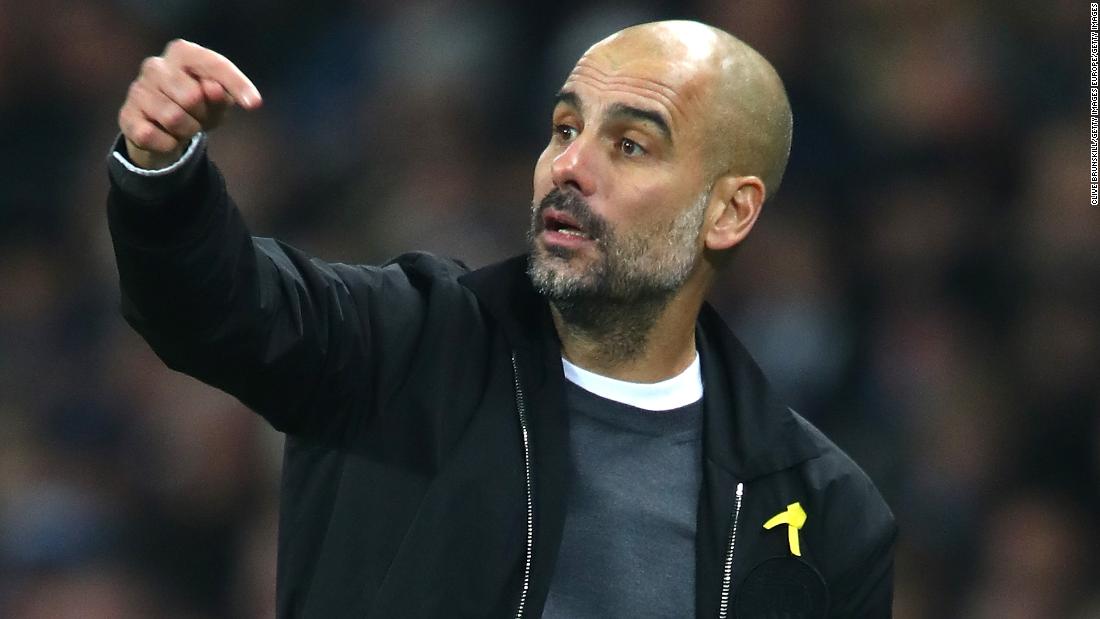 The FA are understandably eager to frame their opposition to
the Manchester City manager’s ribbon as a simple manifestation of their rule
against political statements. However, it is far from clear that such a blanket
ban is in place. Not only does the chief English footballing body allow poppies
to be displayed on shirts, it famously defied FIFA over the national team’s
right to do so in late 2016. It is understandable why they argue that the
symbol is not a political one; the poppy undoubtedly has its roots in a simple
act of remembrance for those that gave their lives in the two World Wars. Even
this is not straightforwardly unpolitical, but assuming that it can be so
construed it is nonetheless apparent that the poppy now represents more than
this. The Royal British Legion lists a host of recent conflicts in the ‘what we
remember’ section of their website – one need only look to James McClean’s
principled opposition to the poppy to understand that not all such military
activities have been free of controversy. The symbol has therefore unavoidably
taken on some kind of political significance.
The FA are understandably eager to frame their opposition to
the Manchester City manager’s ribbon as a simple manifestation of their rule
against political statements. However, it is far from clear that such a blanket
ban is in place. Not only does the chief English footballing body allow poppies
to be displayed on shirts, it famously defied FIFA over the national team’s
right to do so in late 2016. It is understandable why they argue that the
symbol is not a political one; the poppy undoubtedly has its roots in a simple
act of remembrance for those that gave their lives in the two World Wars. Even
this is not straightforwardly unpolitical, but assuming that it can be so
construed it is nonetheless apparent that the poppy now represents more than
this. The Royal British Legion lists a host of recent conflicts in the ‘what we
remember’ section of their website – one need only look to James McClean’s
principled opposition to the poppy to understand that not all such military
activities have been free of controversy. The symbol has therefore unavoidably
taken on some kind of political significance.
The issue of independence, one might argue, is different in
that it is not an apolitical issue that has been in some sense co-opted: the
fight for Catalan independence is an inherently political movement. This may be
true, but upon listening to Guardiola’s reasons for wearing the ribbon it is
hard to sustain such an argument. In his understated but dignified explanation
as to why he is choosing to ignore the FA and risk a touchline ban, he brought
attention to the political prisoners who remain incarcerated after pushing for
independence. At its core, this is a humanitarian issue – protesting an attack
on freedom of expression is possibly less of a political position than
implicitly supporting the actions of the British military, and it is certainly
less of a controversial position. The cultural acceptance of the poppy, and its
tie-in with the idea of patriotic values, are not reasons for calling it
apolitical: in making such a judgement, the FA are unavoidably endorsing the
political sentiment behind the poppy. In fact, they are endorsing it all the
more thoroughly by refusing to even acknowledge that there are political issues
at stake. The distance and ‘foreignness’ of the Catalan debate has allowed them
to more easily conclude that Guardiola’s ribbon is political, in so doing
impliedly casting aspersions on the validity of the cause while maintaining the
guise of neutrality.
Perhaps it would be better to do away with the idea of
keeping politics out of football altogether. The corporate money being pumped
into the game is already causing something of a disconnect between clubs and
their local fans; the idea that rules should be imposed to sever teams from
their city’s culture and history once and for all is far from appealing. Take
Liverpool. The city has a rich socialist history, and icons of the club such as
Bill Shankly espoused a footballing ethos that reflected these values. Can it
really be beneficial to enforce a kind of bland light entertainment status on
football? Things such as bumper television deals and the introduction of VAR
are already moving the game in this unwelcome direction, and the change should
be resisted. Shankly’s oft-quoted words about football being more important
than a matter of life and death were not meant to convey that winning or losing
is everything. Quite the opposite: the cultural phenomenon of football,
involving far more than just the games being played out on the pitch, was
all-encompassing, embracing entire ideologies. This is being stripped away, and
rules against political statements are a part of this.
To return to Dworkin’s idea, it seems clear that the FA’s
rejection of the poppy as a question of politics is in itself a political
position. By extension, so too is their classification of the Catalan
independence ribbon as a political symbol – the very categorisation serves to
call its legitimacy into question. This may be right, or it may be wrong, but
however much the FA may want it to be it is far from neutral.

