Showing posts with label referee. Show all posts

Thursday, 18 October 2018

VAR and the Law


In the aftermath of VAR’s shambolic outing in Tottenham’s FA Cup meeting with Rochdale in February, Mark Thompson (@EveryTeam_Mark) penned a thought-provoking piece on the need to look at the laws of the game in the same way as the laws of the land. It argued that the rules laid down by the FA are open-textured, and that different valid interpretations are possible within the broad ‘statutory’ limits. This is perfectly true – as the famous professor of jurisprudence H.L.A Hart observed, it is an inevitability of the nature of language that rules will admit of more than one meaning. Further, even when the ‘plain meaning’ reading of a rule is clear, the context may change its application. However, this comparison suffered as a result of the absence of anything in football akin to precedent: once a rule is interpreted by a referee in one way, it is not applied consistently thereafter.


As such, within the context of a critique of VAR, the parallels between law and the rules of football were imperfect. Nonetheless, there is undoubtedly merit in drawing the comparison. The Video Assistant Referee technology most resembles a legal mechanism known as judicial review – this allows courts to check the decisions of officials and strike them down where appropriate. In this scenario, the official is the matchday referee: much can be learned about the legitimate scope of VAR by looking at the grounds upon which courts will interfere with administrative decisions.


The three broad grounds for judicial review, as spelled out by Lord Diplock in the case of GCHQ, are illegality, irrationality and procedural unfairness. The latter two are of only limited use in a footballing context. Procedural unfairness could certainly never function as a basis for overturning an on-pitch official’s decision – the referee is under no obligation to explain the process by which he arrives at a call, and provided it is correct there can be no prospect of a video referee overturning the decision. In other words, any review conducted by VAR is bound to be substantive. This still leaves open the prospect of irrationality; the standard of reasonableness review has changed over time, but it now broadly resembles the doctrine known as ‘proportionality’. This dictates that any decision must be a justifiable way of furthering a legitimate aim in order to be upheld. Perhaps this could be used to assess the validity of refereeing decisions taken in order to ‘let the game flow’, or to pursue other such abstract goals, but once the call of a referee is legal on its face it is generally unlikely to be sufficiently irrational to warrant being overturned.


Illegality is thus by far the most useful concept to consider in relation to VAR, and it moves closer to the points touched upon in Mark Thompson’s initial piece. However, the video referee is not best thought of as an appeal judge looking afresh at the meaning of the relevant law; he is conducting judicial review, examining whether the referee’s decision was one that was appropriate for him to make. When will a referee’s decision be ‘illegal’? Are all decisions that are adjudged to be incorrect inherently beyond the authority of the referee, or do the laws of the game act as empowering statutes that give each referee a degree of discretion? These questions have been considered in the context of judicial review, and the answers that have been given shed some light on the extent to which VAR should interfere.


Judges are always wary of conducting what is known as ‘de novo’ review. Their role is not to ‘substitute judgment’, replacing their own opinion for that of the initial decision maker – rather they must decide on the validity of the first-instance decision-maker’s actions. Prior to a case called Anisminic, only decisions that were outside the jurisdiction of the official in question would be overturned; this is patently too deferential to function in a footballing context, where all of the decisions made by a referee are his to make even if he gets them wrong. Ultimately, it was adjudged to be too deferential for judicial review as well – error of law is now a valid ground for interference. However, this leaves the question of how to define an error of law. The reviewing court cannot simply look at the decision afresh, apply the law as they see it to the facts and foist this verdict upon the initial decision-maker; this would amount in practice to de novo review. Rather, they must take as their starting point the initial decision, and ask whether that falls within the scope of the relevant statute.


This is a tightrope. The court (VAR) are not asking whether the original decision is plausible – if an interpretation is understandable but nonetheless wrong it must still be struck down as illegal. Rather they are asking whether, given the open-textured nature of the law touched upon earlier, the decision can be called wrong at all. Thus, a video referee may disagree with an on-field referee’s call, but nonetheless reach the conclusion that the relevant law admits of both conclusions. Wherever this is the case, VAR should leave the original decision intact. This is not the crude ‘clear and obvious mistake’ standard often bandied about by pundits; it is a standard that advocates correction of all mistakes, but a narrow conception of what is meant by ‘mistake’.  Just as in a legal context the case-load concerns and the desire to uphold the legitimacy of administrative bodies warrants giving the original decision-maker some space within which to operate, the need to keep games flowing and respect the position of the referee necessitates a degree of deference from VAR. Particularly where a decision hinges on standards of ‘recklessness’ or ‘dangerousness’, it is unlikely that a decision could genuinely be called wrong: indeed, Jones v First Tier Tribunal involved the issue of recklessness and returned the verdict that reviewing bodies should be slow to find an error of law.


It is often said that VAR comes into its own when there is an objectively verifiable mistake of fact that needs to be corrected. As luck would have it, this is the precise standard required by judicial review in order to intervene based on an error of fact (E v Home Secretary). Provided a factual error that played a material part in the original decision can be shown, the law says that it is justifiable to overturn that decision. This is where VAR can thrive; in the world of judicial review objectively verifiable errors of fact are a relative rarity, but video technology is excellent at providing such verification in a sporting context. Thus, from a purely legal perspective, there can be few complaints with VAR’s correction of factual mistakes.


In summary, the debate as to the proper extent of VAR bears a striking resemblance to that relating to the appropriate extent of judicial review. This comparison paints the referees as decision-makers empowered by the laws to make decisions; these should only be offset where it can genuinely be said that a decision goes against those laws, or where it has been taken on the basis of a mistake of fact. Whether the footballing context calls for more or less deference, or even for no review at all, is a question that cannot be answered purely by drawing parallels to law - nonetheless, the legal framework provides a good starting point for discussion as to what exactly VAR is trying to achieve.

Friday, 2 February 2018

Antonio Rattín and the Birth of Yellow and Red Cards


To many people watching football today, the game cannot be imagined without yellow and red cards. Fans discuss the seriousness of offences by reference to the colour of card that they warrant; bookmakers offer odds on who will be the first to see yellow or red in any given match. It may come as some surprise, then, that the cards system is not even fifty years old.


The system of sanctions in football stretches much further back than fifty years, to the inception of the game as we know it today. For any kind of formalised sport to exist at all, there must be rules and an imposition of punishment for infringement. The ‘mob football’ of the Middle Ages had few such rules, and shared little with its modern-day descendant other than the name; unlimited numbers of players from opposing towns sought to convey a pig’s bladder to the markers at opposite ends of the settlement in which the game was being played. By some accounts, any method short of murder and manslaughter was allowable – one can only imagine that Tony Pulis would have thrived in such an era! It took until the mid-1800s for formal codification efforts to commence. In 1863, the various attempts were unified under one code and adopted as the official rules by the newly-created Football Association: this is generally considered the birth of the modern game.


It is the cards themselves that are a surprisingly recent addition – it was not until the 1970 World Cup, 107 years after the rules first spelled out offences that would warrant cautions and sendings-off, that these coloured cards were introduced in competitive football. The English game did not adopt the system until six years later. Before this, referees would have to make their meanings plain to the players through their words and actions alone. This caused a few problems on the international stage, where officials would frequently have to resort to exaggerated charades to overcome the language barrier, but anyone who has witnessed Mike Dean playing an advantage knows that the art of performative refereeing is very much alive today. For the most part, the lack of a visual representation of each degree of punishment did not pose much of an issue.


How, then, did the now-familiar cards end up getting adopted into the very fabric of the game? As is often the case, controversy was the catalyst for innovation. The 1966 World Cup is remembered primarily as England’s only major tournament success, but its legacy is even greater than that. The team that would go on to be champions came up against Argentina in the quarter-finals, and two separate incidents sparked a reform that would change how football was played.


The more high-profile of the two controversies was the sending-off of Argentinian captain Antonio Rattín. The physical number five had retained some of the attributes that would undoubtedly have been revered in players of mob football – to this day he is remembered as a legend at Boca Juniors for his combative qualities. It may seem unsurprising, therefore, that referee Rudolf Kreitlein ended up giving him his marching orders. However, the sending-off was not for a tackle or a fight. In fact, it didn’t appear to be for anything at all. The post-match report indicated that Rattín had been removed from the game for “violence of the tongue” towards the referee, but the German official didn’t speak a word of Spanish! A dirty look had got him removed from the World Cup quarter-final. Perhaps understandably, the Argentinian was reluctant to accept his fate. Once it had finally been successfully communicated to him that Kreitlein had sent him off, with the aid of head of tournament referees Ken Aston, he refused to go: policemen were eventually brought on to the pitch to escort him away. Still he would not go quietly – he sat down on the red carpet exclusively reserved for the Queen, and as a last act of defiance he wrinkled an English pennant as he was marched away.


This grabbed the headlines of the day, but in truth it was the less talked-about incident that truly gave rise to the idea of the cards system. Rattín did not initially realise he had been sent off, but the message got through to him eventually – he was evidently far from impressed with it, but this would have been true even if he had instantly been made aware of his dismissal. In contrast, the other controversy of the match was not settled until over thirty years later. Both of the Charlton brothers were playing for England; Jack was involved in a goalmouth tussle, and Bobby interceded on his behalf during the ensuing talk with Kreitlein, but the referee gave no indication that either of them had been cautioned. Certainly, neither of the two brothers were aware of it until reports in the next day’s newspapers suggested that both had received bookings: then-manager Alf Ramsey had to contact FIFA for clarification. It would appear that the response he received was far from conclusive, as in 1997 the matter was still playing on the mind of Bobby Charlton. In fairness, he had only ever received one other career booking, and the referee who gave that to him had since apologised for getting it wrong – he cannot be blamed for trying to get to the bottom of the only remaining blemish on an otherwise perfect disciplinary record. Nonetheless, when England came up against Argentina again in 1998, FIFA took the opportunity to confirm that they had examined their records at the request of Charlton the previous year, and found that both brothers had indeed been cautioned by Kreitlein.


Ken Aston, who had watched these incidents unfurl with horror before being called upon to try and persuade Rattín to leave the field, did not want to see a repeat. He had been a renowned referee himself, taking charge of the 1963 FA Cup Final in his final game before retirement. The previous year, he had also been given the honour of officiating at the opening game of the 1962 World Cup; he impressed so much that he was handed the task of presiding over Chile v Italy in a subsequent game. This was not something for which he was particularly thankful – he later described himself as “acting as an umpire in military manoeuvres” in the match that came to be known as ‘The Battle of Santiago’. Prior to the game, reports emerged in Chile that newspapers in their opponent’s country had been questioning the beauty and morals of Chilean women: tempers flared high, as both sides treated the occasion as a battle of honour as much as a football match. Aston broke up numerous fights, sent off two Italian players and had to work in conjunction with armed police to ensure that the match reached a conclusion. He was praised greatly for his handling of a highly volatile situation.


The respect he had garnered within the game was reflected in his appointment as head of referees at the 1966 tournament – his subsequent invention would ensure his legacy extended well beyond the end of his career. The story goes that he was sitting at a set of traffic lights on Kensington Road, dwelling upon how to avoid incidents such as those he had recently witnessed, when the idea came to him: yellow for take it easy, red for “stop, you’re off”.  The idea was as simple as it was brilliant: simultaneously, the issues of the language barrier and the uncommunicated caution were removed from the game.


Football has always been resistant to change, but even the governing bodies struggled to find a downside of the concept. FIFA trialled the concept at the next World Cup in 1970, to great success – the FA dragged their heels for six further years, but eventually also adopted the system that football fans around the world now treat as integral to the sport. This, however, would not prove to be the end of the story. After less than five years of using the cards, the English authorities felt that red cards had led to an upswing in “demonstrative referees” sending people off with too much regularity: the more serious of Aston’s two cards was duly removed from the domestic game following a decision of the FA Council in January 1981. Amazingly, red cards were not reintroduced into English football until 1987, and even then only at the insistence of the International Board – this is why footage of the first ever sending-off in an FA Cup final, in a clash between Everton and Manchester United in 1985, shows the referee taking Kevin Moran’s name and then gesturing him off the field, rather than showing him a red card. The cards system as we know it, then, has only been around as an essential part of the game for a little over thirty years.


Ken Aston cannot have known when sitting at those traffic lights that his idea would permanently change the way the sport he loved was played. Nor could Antonio Rattín have envisaged that his sit-down protest on the Queen’s red carpet would give rise to a system that helped bring clarity and transparency to on-field decisions, reducing the chances of anyone else being sent off for little more than a dirty look. In football as in life, progress can be driven in strange and unpredictable ways.

- Follow me on Twitter @JamesMartin013

Thursday, 18 January 2018

A Step Too VAR? How Video Technology Can Perpetuate Further Injustice


It was an historic moment. Leicester’s Kelechi Iheanacho had the ball in the back of the net, and wheeled away in celebration only to find the flag raised. On any other day, this would have dashed his hopes of doubling The Foxes’ lead and putting the FA Cup third-round replay against Fleetwood to bed. Not on this occasion: this was a fixture in which the ‘video assistant referee’ was being trialled, and Mike Jones duly informed on-field official Jon Moss that the goal should stand. Cue celebrations from Iheanacho, but also from most of the wider footballing community.


Were these celebrations premature? Certainly Iheanacho’s were not – he and his teammates were left standing around while Mike Jones pondered the tight call, and it was not until after the referee gave the signal that muted hugs and high-fives ensued. What of the jubilation further afield, where this intervention of VAR was lauded as the ushering-in of a shining new era for football? Unfortunately, those piling on the superlatives do not appear to have fully considered the consequences of the system. Some standard criticisms are well-rehearsed: amongst these is scepticism as to how well games will flow when they are prone to be interrupted by referrals, and it has to be said that the working of the technology in this instance did nothing to alleviate those concerns. However, it is a less talked-about consequence of the technology that provides the real sticking point.


Here is the issue. Imagine, for a moment, that Kelechi Iheanacho did not take on the early shot after running off the back of his marker, but instead opted to control the ball and work an even better shooting position by looking to go around the goalkeeper. By this time, the referee would have responded to his assistant’s flag and brought back proceedings – at this point, VAR is of no assistance. Unless the ball has actually been put in the back of the net only to be (initially) ruled out for offside, an assessment of the linesman’s call is out of the question: to take the scenario where Iheanacho looks to round the keeper, the referee can hardly order all of the players to return to the exact positions they were in at the point play was stopped in order to see how the passage would pan out. Not knowing for sure that a goal would have been scored, even though the finish would surely have been a formality, the officials cannot award the goal even once the incorrectness of the offside call has been established. Taking the keeper out of the equation is just as valid as the deft chip the Nigerian actually opted for, and would almost certainly have resulted in the same outcome, but this is disregarded under VAR – one gets the benefit of the technology, and the other does not.


There are two potential responses to this problem: one looks to dismiss it, the other to solve it. The solution that might be proposed is a modification of the situations in which the referee blows his whistle. Indeed, Graham Poll alluded to this as a consideration when giving his opinions in the immediate aftermath of the goal being awarded – the suggestion was that in his position as a referee in a match including VAR, John Moss should have made sure he delayed his blowing of the whistle until after it had become clear whether or not Iheanacho would score. In this way, the game would never be stopped prematurely on the basis of an incorrect decision from an assistant referee, and where the decision did turn out to be correct the ‘goal’ could be chalked off without much difficulty. However, neat as this sounds, it does not solve the problem. Bearing in mind that the vast majority of offside decisions are correct, how long does the referee let an attack run for before he acknowledges the flag? What even constitutes an ‘attack’ which he should let run in the first place? In 2013/14, Liverpool travelled to The Etihad to take on Manchester City. They took an early lead, and looked to have carved out a great opportunity to double it when Raheem Sterling was put clean through on the counter. Such was the high line of the hosts, this occurred on the halfway line: the offside flag was erroneously raised. There is no obvious answer as to what a referee assisted by VAR should have done in this scenario; on one hand Sterling was clean through and the play should have been allowed to unfold, with the offside call left for assessment afterwards, but on the other hand receipt of the ball on the halfway line could hardly be said to constitute an attack. Had Sterling been offside, as the linesman believed, allowing the move to continue would have meant allowing an entirely pointless break half the length of the pitch. There are no workable criteria on which to judge when and for how long the referee delays acknowledgment of an assistant’s flag, and this solution duly fails.

With no solution, proponents of the technology have to look to simply dismiss the issue that is posed by the possible variation in circumstances surrounding offside calls. The principal line of argument is that, while some would-be goals will inevitably still be disallowed, VAR nonetheless reduces injustice by correcting the situations where a goal immediately follows a stray offside flag and consequently lowering the total number of wrongly disallowed goals. It would be churlish to suggest that this argument is completely without merit. Certainly, it is at least arguable that a scenario where some wrong offside calls are corrected is preferable to one where none of them can be changed. However, this is not as inevitable a conclusion as it sounds. The current situation, though it produces immense frustration on a fairly regular basis, can at least say that it makes all teams and all match events equally susceptible to suffering unfairness by way of refereeing error. This equality is, perversely, a form of fairness: it acknowledges human error as an inescapable part of the game, and ensures that these errors are not channelled into a few specific areas. Video technology, meanwhile, produces a further category of unfairness by only functioning to correct errors of a particular type. It has been shown that this flaw is inherent – were there an effective way for VAR to eradicate all refereeing mistakes, there would of course be no controversy. Given this, it has to be asked whether it is a welcome addition to the game. A match where one valid goal is mistakenly flagged for offside and another stands is a cause of great consternation to fans; a situation whereby one mistaken call was corrected and another was left to stand would surely provoke even more outrage.


This is not a fatal blow to the case for video technology. There are undoubted benefits of VAR, and if it was to be brought in on a more permanent basis then fans and players alike would no doubt adapt to it before long. However, the problem of offside goals at least gives cause for consideration: there is a danger of getting swept away on the wave of hype generated by Iheanacho’s goal, when really it showcased the flaws with video assistants as much as the advantages. 

Sunday, 15 January 2017

Manchester United 1-1 Liverpool: Post-Match Analysis

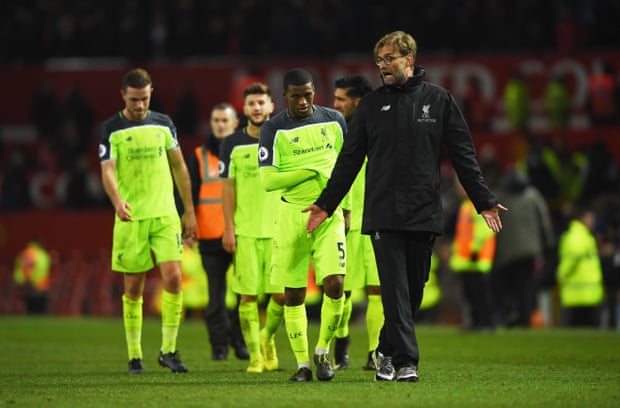
Liverpool had to settle for a point in one of the most significant clashes with their biggest rivals in recent years. The home side needed a win to gain ground on the top four, and Liverpool made the trip to Old Trafford knowing that three points would keep them in touch with league leaders Chelsea. In this respect neither team came away satisfied; given the way the match went, however, United fans can be thrilled with a point. Klopp’s side were superior for much of the match, but were undone by a late Ibrahimovic goal.
It was apparent from the outset that Liverpool had shown up determined to put in a more energetic performance than the lacklustre showing at Southampton midweek. The pressing, which in truth has not been particularly impressive over the last few weeks, was well and truly back: Origi was perhaps a little brainless in his charging down of the ball at times, but United nonetheless felt the pressure. That said, Mourinho’s men probably enjoyed the best of the first fifteen minutes – once they had settled down and accustomed themselves to the pressing, they managed to put Liverpool on the back foot. The game remained open, however, and Firmino was unlucky not to make the breakthrough after robbing Phil Jones of the ball on the edge of the United box. The disappointment did not last long – Pogba handled the ball from the resulting corner, and Milner dispatched the penalty excellently.
This was the first in a series of errors from Pogba, who frankly looked out of his depth. He should have been sent off minutes later for essentially putting Henderson in a headlock, but apparently the penalty signalled the first and last decision the referee would rule in our favour. Somehow United ended up with a free kick following the fracas, which forced an excellent stop out of Simon Mignolet. This was one of three vital saves in the first half – he has excelled this season, and was faultless once again today. This can partially be attributed to the competition from Karius, who also put in a strong display in his most recent appearance, but it also worth noting that the Belgian has always been a world class shot-stopper. Other areas of his game let him down, but there are few keepers in the league who perform the fundamental duty of the goalkeeper better than he does. Sadly, Mignolet’s contribution was not quite enough to see the team over the line with the three points. Wijnaldum, who aside from his finishing put in a very strong performance, spurned two very good opportunities to double the lead in the second half; this was eventually punished with less than ten minutes to play, as Ibrahimovic forced the ball over the line following a scramble. To add insult to injury, Valencia was offside during the build-up: this adds to the rapidly-increasing list of recent Old Trafford goals that should not have stood.
The case could also be made that Rooney should have been sent off. He was beaten to the ball by Milner, and in his follow-through planted his studs on to the left-back’s ankle. It should certainly have been at the very least a yellow, but even this was not produced – this was just another factor that added to a frustrating day. Still, perspective is definitely needed: a point away at Old Trafford is a good result, and would have been taken by a lot of fans before the game. Also, there was little wrong with the performance: it has to be accepted that sometimes in football things simply don’t go for you. Looking forward, Liverpool can be encouraged – nine times out of ten, Klopp’s men will be rewarded with a win for this kind of showing. A few people worthy of individual praise are Emre Can, Jordan Henderson and Trent Alexander-Arnold. Can was under immense scrutiny following some poor recent performances, but barely put a foot wrong. He tracked back well when needed, and provided a good option going forward. Henderson demonstrated exactly what the team have been missing in his absence – he was the heartbeat in terms of passes when on the ball, and provided cover when the team were out of possession. Alexander-Arnold was very much thrown in at the deep end with this game, following the injury to Clyne, and he can be very proud of how he handled the pressure. He dealt with Martial admirably, and also made a nuisance of himself going forward with some overlapping runs. A couple of his crosses left something to be desired, but it would be wholly unreasonable to expect him to come into a fixture of this magnitude at his age and be the complete full-back. It is fair to say that the youngster has an exciting future.

The seven-point gap to Chelsea is not, of course, ideal, but nor is it insurmountable. Provided Liverpool can prevent the gap from widening further before the two teams clash at the end of the month, the title is still very much to play for. If nothing else, the top four picture continues to look very promising – regardless of league position, it is clear that we are making steady progress under Klopp.
-James Martin
Follow me on Twitter @JamesMartin013


Saturday, 8 November 2014

Liverpool 1-2 Chelsea: Bad Play, Bad Ref, Bad Result

Having managed to prevent European giants Real Madrid from scoring more than one goal in midweek, Liverpool fans went into the game against Chelsea with a fair amount of confidence. Chelsea came into the game unbeaten this season, but there was some optimism that we could perhaps break this run, or at least take a point away from the match. Unfortunately the majority of stand-out performers from midweek were left out of the starting eleven, and we were consequently treated to another terribly mediocre performance. Chelsea played much better than us and created more chances: on balance, they certainly deserved to win. However, we would probably have snatched a draw had it not been for the failure of the referee to miss a blatant Cahill handball in the box just minutes from time.

The team made a promising start. Mario Balotelli was making some good runs in behind the defence for once, and although he was getting caught offside too often he was definitely causing the Chelsea defenders some problems. They looked uncomfortable whenever a Liverpool player ran at them; the direct style of Coutinho and Sterling carved open gaps in the blues’ back line. It was this positivity that resulted in the reds taking the lead after 9 minutes – Emre Can was not closed down, and his ferocious drive deflected off Gary Cahill and into the net past a helpless Courtois. Sadly, the lead didn’t last long. Chelsea won a corner, and what happened next was totally predictable. Despite outnumbering the Chelsea players in the box by two to one, the hapless defending led to a failure to get the ball away. Mignolet was forced into a good stop from a Terry header, but the ball came out to Matic. There was a hint of handball about his layoff to Cahill, but it looked accidental. The centre-back then smashed the ball goalwards, and despite Mignolet’s best efforts the ball was adjudged to have crossed the line by Hawkeye technology.

There was a brief period after the equaliser where the game really opened up. Liverpool were absorbing a lot of pressure, but they were also springing dangerous looking counter attacks. Balotelli even managed to get the ball in the back of the net with a tidy finish past Courtois, but he was just offside. By the half hour mark, this Liverpool threat seemed to have faded somewhat. It became an exercise in defending, and past experience should have served as a warning that this could never end well. Whilst we managed to keep Chelsea from taking the lead for the rest of the first half, it was really only a matter of time. It took until the 67th minute, but Mourinho’s men did finally take the lead. Like the first there was a touch of controversy about the goal – Azpilicueta took the ball round Coutinho, but looked to have run it off the pitch in the process. Replays were inconclusive, but it looked like a fraction of the ball hadn’t crossed the line. His subsequent drilled cross was parried away by Mignolet, but it fell to Costa. He made no mistake with the finish.

Despite bringing on Allen, Borini and Lambert, Rodgers had no success whatsoever in changing the tide of the game. Although we were the trailing side there was a complete lack of urgency and intensity, and we frankly didn’t deserve a goal. However, into added time, Liverpool worked their way into quite a threatening position. The ball came out to Gerrard on the edge of the box, and he aimed to roll back the years with an extremely powerful effort. It may have been heading for the corner or going just wide, but we never got the chance to find out; Gary Cahill lent into the ball with his arm. It was pretty blatant: Steven Gerrard certainly thought so, clearly incensed at the referee’s choice to wave away the penalty claim. This was the last incident of note, and Chelsea comfortably weathered a late period of weak pressure to finish the game 2-1 victors.

We can rightly point to the referee as the reason we didn’t get a point – had Anthony Taylor seen the handball, we would most likely have scored the subsequent penalty and got the draw. However, it would have been undeserved; factors other than the referee have to be considered to get to the root of why we put in such a lacklustre performance. Rodgers has some serious questions to answer: why, for example, was Kolo Toure left out? He certainly earned a place based on his performance at the Bernebau, and his leadership and experience would surely have been invaluable against Chelsea. However, 20 million pound signing Dejan Lovren was preferred; it’s fair to say that he and Skrtel were quite poor throughout. Rodgers’s assertion that we don’t need a defensive coach also has to be questioned. At the corner which led to the first goal, the two centre backs were seemingly marking each other on the edge of the box. With only four Chelsea players up for the corner and eight Liverpool players in their own box, there is no way we should be conceding.

This stubbornness in our manager is extremely worrying. Last season it was ‘assuredness’ which was ‘great to see in such a young manager’ – it’s all well and good when we’re getting the results, but his refusal to change the formation and personnel is costing us dearly at the moment. He is blindly standing by his summer signings to the detriment of the team, and unless he swallows his pride soon then our results will continue to be disappointing. We now find ourselves in a position where we could well be in the bottom half of the table by Monday, and unless Rodgers bucks up his ideas then we might even end up in the wrong half of the table come the end of the season. This is admittedly a worst-case scenario, but hopes of the top 4 are definitely fading rapidly.
-James Martin
Follow me on Twitter @JamesMartin013


Sunday, 29 December 2013

Caught in Chelsea’s Webb- Liverpool Slip to Second Consecutive Defeat

Liverpool went into the game at Stamford Bridge with a relatively high level of confidence- despite coming into the game on the back of a defeat against City, we had performed well in that game and felt that we had the ability to beat Chelsea. History was also in our favour; previous to this fixture Liverpool had never lost two consecutive games under Brendan Rodgers, and Chelsea had not defeated us in the league since 2009/10. Unfortunately it just wasn’t our day- both of these runs were broken as Liverpool ended up losing 2-1.

It all started so well. Martin Skrtel, who has come under fire a lot recently for his error-prone nature (and all-round inability to function particularly effectively as a centre-back) opened the scoring after just three minutes, poking the ball, for once, into the correct goal! Sadly, that was pretty much it in terms of Liverpool attacks in the first half. From then on it was all Chelsea; the reds didn’t look their usual selves at all, getting completely dominated. Chelsea pressed well and got their reward on 17 minutes- Hazard equalising with a lovely curled effort after the ball fell kindly for him. Despite my hopes this did not provoke a reaction from Liverpool. We continued to sit back, and on 34 minutes were punished again, Eto’o firing home after a catalogue of defensive errors (as well as a weak attempt at a save from Mignolet). For the last 10 minutes of the half Liverpool seemed fractionally improved, but still lacked any sort of attacking potency.

A lot of the game was sadly much more focused on the officiating than the football being played. I thought we’d been very hard done by at City- this was even worse! The referee, Howard Webb, didn’t exactly cover himself in glory in the first half, not even showing a card to Samuel Eto’o after he tackled Henderson, studs showing, inside the first minute. He should have been off, but nobody thought too much of it at the time as Skrtel scored from the subsequent free kick.

Things only got worse in the second period, with Webb seemingly determined not to give Luis Suarez a penalty. Personally I think Suarez has cleaned up his act a lot lately; he seems to go down much less easily than he used to, and in general seems to have a more relaxed, civil demeanour about him. Officials don’t seem to have picked up on this, and consequently his reputation as a diver still goes before him. The first incident was from a corner- John Terry (incidentally playing his 600th game for Chelsea) jumped on top of him, completely preventing Suarez from jumping for the ball and bundling him to the ground in the process. Webb was placed well to see the incident but gave nothing- a blatantly unjust decision. The second was even worse: Suarez was involved again, this time getting fouled by the man who should already have been off, Eto’o. Cesar Azpilicueta had just done well to dispossess Suarez, then Eto’o came across and knocked Suarez to the ground right in front of Webb’s nose. Unbelievably he gave nothing, and Chelsea went on to retain their 1 goal lead and win the game.

These weren’t the only two refereeing decisions I was aggrieved at. Oscar dived multiple times during the match, and was never once punished for it. He later committed a clearly bookable offence on Lucas, so he should have been off the pitch. Willian also totted up about 6 fouls early in the game without any reprimand. That said, Liverpool were by no means at their best. Though the referee has to shoulder a large portion of the blame for the result, we could have played much better, and at the end of the day the two penalty shouts would have been inconsequential if we could have scored more from open play.

To sum up, I’m very frustrated about the defeat and am angry at Howard Webb for his awful decision-making, but I don’t think we can complain too much seeing as the players were also at great fault. Fortunately this is only one game, and this defeat is by no means, as some reactionaries are dubbing it, ‘the end of our season’. The next game is against Hull on New Years Day- onwards and upwards.
-James Martin

Follow me on Twitter @JamesMartin013