Thursday, 26 September 2019

When Ireland Played as One


To this day, England’s record victory stands at 13-0. The rout was achieved in February 1882, against an opponent playing its first ever international fixture: The Irish National Football Team. Even following the division of Ireland in 1920, this united team would continue in some guise for another three decades.


The pre-partition side was only the fourth ever national team to be formed, following in the wake of England, Scotland and Wales. The fledgling state of the international scene meant that opponents were limited, with Ireland exclusively competing against the Home Nations for the majority of its existence. The game was also still in its infancy domestically, particularly when compared with the flourishing leagues of England and Scotland, so the national side had to be creative.

A recreation ground in County Cork, circa 1900

Ireland turned to youth. Following the 13-0 drubbing in their first match, the team got off the mark in their next fixture against Wales courtesy of a player who remains the youngest ever goal-scorer for an Irish side of any description. Samuel Johnston bagged an equaliser at Wrexham’s Racecourse Ground at the age of just 15 years and 160 days: in the intervening 137 years of international football, there have only been two younger goal-scorers.


The goal did not prove significant in the context of the match, as Wales went on to win 7-1, but this innovative spirit would eventually prompt a change in Ireland’s fortunes. They had to endure a galling run of 14 defeats and a draw, including a demolition in the inaugural British Home Championships in 1884, but this was a team still finding its feet. The first win finally came in 1887, with a 4-1 triumph over Wales in Belfast. Within the next few years, and at the 13th attempt, Ireland avoided defeat to England for the first time. In a bid to build on this burgeoning success, the Irish National side took a bold step.


In 1897, for the first time ever, a coach took charge of a national team. Ireland turned to Billy Crone, a former defender who had played twelve times for the national side in its earliest days, to oversee a meeting with England. It did not pay immediate dividends, with Ireland suffering a 6-0 defeat, but in the next game Crone presided over a 4-3 triumph against Wales. A defeat to Scotland followed, meaning the national side once again propped up the Home Championship standings, but the appointment of a national manager some fifty-seven years before England or Scotland followed suit undoubtedly contributed to the Irish National Team becoming more competitive.


Further radical steps followed. In 1899, the IFA lifted the restriction on selecting players not based in the domestic leagues, thus opening up a wider talent pool for selection. Just four years later, they had broken the duopoly on the British Home Championship: up to this point only England and Scotland had triumphed, but with a manager and English-based players at their disposal the Irish were able to force a three-way tie. Much of this can of course be attributed to the lack of a goal difference rule at the time, but it was nevertheless still a notable achievement.


The pinnacle of the Irish National Football Team, however, came eleven years later. In the last British Home Championships before the First World War, Ireland – managed by Hugh McAteer - upset the odds to win the tournament outright. England, who they had only defeated for the first time the previous year, were brushed aside 3-0. A brace from Billy Gillespie then secured a 2-1 win over Wales: this would not have been possible prior to the IFA reforms at the turn of the century, with Gillespie playing his club football in England for Sheffield United. A 1-1 draw with Scotland then confirmed Ireland’s status as champions, something that would have been unthinkable just a few years previously.

It was a cruel twist of fate that this would be Ireland’s last international fixture for five years. The outbreak of war undid much of the national team’s progress, and in the Home Championships immediately following the end of the conflict they finished bottom. They suffered the same fate in the 1919-20 iteration of the competition, despite only falling to one defeat: this would be the last time a sole and undisputed all-Ireland side would compete together.


1920 saw the passing of The Government of Ireland Act. This followed bitter fighting between the British and the Irish Republican forces in the south – while the legislation initially saw both parts of the island remain under British control, republicans had already gone about establishing a parliament and assembling a functioning state. The Anglo-Irish Agreement of 1921 duly provided for the official establishment of the Irish Free State. In fact, Northern Ireland were included in this arrangement, but were provided with an opt-out: this they exercised, and in 1922 Ireland became an island divided.


Almost in parallel to the political developments, the FAI emerged as football’s governing body in the south a year prior to the split becoming official. It had gained official recognition as the association representing the Free State by 1923; the sectarian divisions that pervaded so many aspects of life in Ireland had reached football, and there was now a team for the north and a team for the south. 

Even so, there was far from complete segregation in the early years of the competing federations. Players would routinely play for both national sides: the IFA in particular continued to select on an all-Ireland basis, and there was generally little reluctance from those in the Republic to accept a call-up. This was starkly highlighted in September 1946, when England played both teams in the same week: the IFA ignored a request to only pick players from its own jurisdiction, and two men consequently featured against the English in both fixtures in the space of three days.


This willingness to turn out for both national sides was a rare display of unity at a time when cultural divisions were generally only deepening. It showed, perhaps, that at a human level there were far more similarities than differences amongst the people of the island of Ireland. Nonetheless, from a purely sporting perspective, the situation was unsustainable. 1949/50 saw both sides enter qualifying for the World Cup: The Republic played in a group with Sweden and Finland, while Northern Ireland sought to gain qualification through the Home Championship. Ultimately neither country made it to Brazil, so the two teams did not meet, but the same players representing multiple countries in a single World Cup campaign was obviously problematic.


It was clear that such a situation could cause far more major problems in the future. Furthermore, the IFA’s repeated selection of what was essentially a continuation of the all-Ireland team engendered resentment from the FAI, if not the players – they questioned why it should be Northern Ireland who carried the gauntlet for the whole island. A rule was duly introduced by the Republic that effectively prohibited players from turning out for the IFA-run side, and with this the all-Ireland side truly came to an end.


The elusive question of Irish identity would of course go on to cause far deeper divisions, and it was to produce one more problem in the footballing context. In the years following the split, both national teams competed under the name Ireland – when players were moving freely between the two this was an oddity more than a significant issue, but with the two teams entering the same tournaments with different players at their disposal it became imperative to differentiate them.


FIFA’s solution was to prohibit either team from calling themselves Ireland. Both nations objected, but perhaps surprisingly it was Northern Ireland who most stubbornly clung to the name. Again, that both countries felt so fiercely Irish is evidence of a common thread transcending all of the various differences: as late as the 1970s the North continued to defy FIFA through use of the name Ireland on match programmes and other official literature. This decade saw a significant shift, however, and the IFA abruptly shed the ‘Ireland’ moniker. Save for Northern Ireland’s vaguely reminiscent emblem, the last vestiges of the all-Ireland team were gone.


Both sides have gone on to experience their own various highs and lows as independent footballing nations, but always the nagging question remains of what could be achieved if they were to unite. The political question remains fraught, but sport has a unique way of bridging the gaps: if the early days of the all-Irish IFA team did not prove this, the current rugby union setup certainly does. The time may not be right for such a move, and ultimately it is something that can only be achieved with a significant appetite from both of the national associations, but 106 years on from Ireland’s last tournament triumph in the Home Championships it certainly provides something to think about.


Sunday, 15 September 2019

Liverpool 3-1 Newcastle: Reds win again at Anfield


Jurgen Klopp sprung a surprise in attack
Liverpool showed impressive resilience to come from behind and beat Newcastle, stretching their unbeaten run at Anfield to a remarkable 43 games.


Klopp opted to start without Roberto Firmino, who had played in Brazil’s defeat to Peru on Wednesday. The German likely also had Tuesday’s trip to Napoli in mind, but with Liverpool and Manchester City having already broken clear of the rest of the pack it is apparent that every point will count in the league.


Alex Oxlade-Chamberlain, making his second start of the season, was duly tasked with using his midfield base to provide some of the penetration usually offered by the Brazilian. This was noticeably lacking in the opening exchanges, however, and with just eight minutes on the clock Jetro Wilems exploded past a lacklustre Liverpool defence and fired beyond Adrian.


Liverpool’s immediate response was a good spell of possession, but they were always expected to see the lion’s share of the ball against a Newcastle team largely content to sit deep. Steve Bruce’s men limited the European champions to half-chances for the next fifteen minutes, with Salah and Mane largely anonymous despite repeatedly switching positions in an attempt to unsettle the back line.


With 23 minutes on the clock Origi was presented with a reasonable chance to equalise, but could not connect properly with his header. Another aerial dual caused controversy moments later, when Jamaal Lascelles looked for all the world to have dragged Joel Matip down by the neck, but Andre Marriner waved away the protests.


Sadio Mane then produced the perfect response to this setback, making devastating use of his first real opportunity. He received Robertson’s pass before curling the ball delightfully into the top right corner to level things up.


This sparked the Liverpool team into life. The passes and movement came with renewed pace and fluidity, and Newcastle’s back line were caused particular problems by the marauding runs of the full-backs. This momentum could have been arrested when Divock Origi was forced off through injury with ten minutes left to play in the half, but Firmino immediately got to grips with the pace of the game following his shorter-than-expected break.


He played a delightfully-weighted pass into the path of Sadio Mane with his first real involvement since his introduction, and the Senegalese doubled his tally after nicking in ahead of a sluggish Martin Dubravka. Liverpool went in with the lead at half time.


Newcastle again unsettled the hosts at the start of the second period, but this time Klopp’s men regained control more quickly. Gini Wijnaldum went close to an exceptional goal against his former team, controlling Robertson’s pass and unleashing a looping volley that went just over.


The game then quietened down for a time, although Firmino continued to look very lively. Only a good save from Dubravka prevented Andy Robertson from converting a clever chipped pass from the Brazilian on 62 minutes; he tried a shot himself shortly afterwards, but the Slovakian stopper again saved with his legs.


Firmino eventually got his second assist with twenty minutes to play, doing so in sublime style. His disguised flick into the path of Mohamed Salah was inspired, and the forward did not need a second invitation. He placed it firmly beyond Dubravka, putting the game to bed.


The closing stages were something of a procession as a result, although Liverpool did have a fourth chalked off after Firmino was caught narrowly offside before he squared it to Mane. Xherdan Shaqiri came on for the final ten minutes: the lesser-spotted Swiss attacker sacrificed international duty in order to focus on his club commitments over the international break, and will be hopeful of putting some pressure on the regular starters as the fixture congestion increases.


The busy winter schedule will certainly test Liverpool, who perhaps fall down in depth when compared to City, but for the time-being there can be no complaints at all with the 100% record from the first five games.

Wednesday, 8 May 2019

Liverpool 4-0 Barcelona: Anfield’s Greatest Night


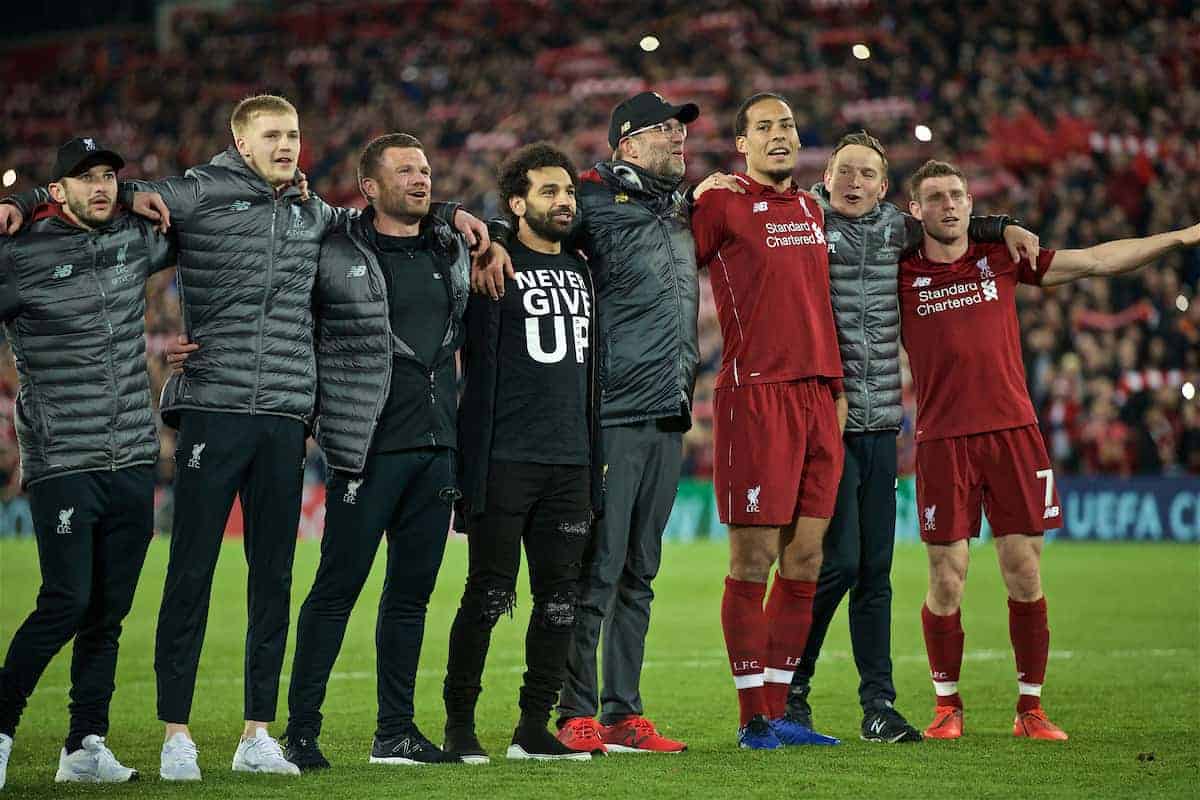
The squad celebrate in front of The Kop
A year ago, Fabinho Tavares was in Monaco. The man hailing from Campinas in Brazil only arrived at Liverpool in the summer: now, arm-in-arm with his diaspora of teammates, he sings the club anthem as passionately as any of the supporters on The Kop in celebration of the most unlikely of triumphs against Barcelona. With this team, at this moment, the message conveyed by the song is symbiotic: it is a pledge by those wearing the shirt that they will always give everything for the fans, and a promise in return that such commitment will be met with unwavering loyalty.

It is this which makes nights such as these possible: the wall of noise from the first whistle willed Liverpool onwards, simultaneously conveying the fierce pride in the team that is not contingent on the result and yet also the real belief that if anyone can do this it is Liverpool. This faith was not misplaced – against all odds, against all logic, a 3-goal deficit was overturned against the side captained by the best player ever to grace a football pitch.


After the first leg, Jose Mourinho gave his thoughts on Liverpool’s prospects. He remarked, with a wry smile, that at Anfield on European nights they can even score goals that are not goals – this was a reference to Luis Garcia’s ghost goal in 2005, the year Liverpool last went on to lift the Champions League. Sure enough, in another semi-final fourteen years later, a miracle was to occur again.

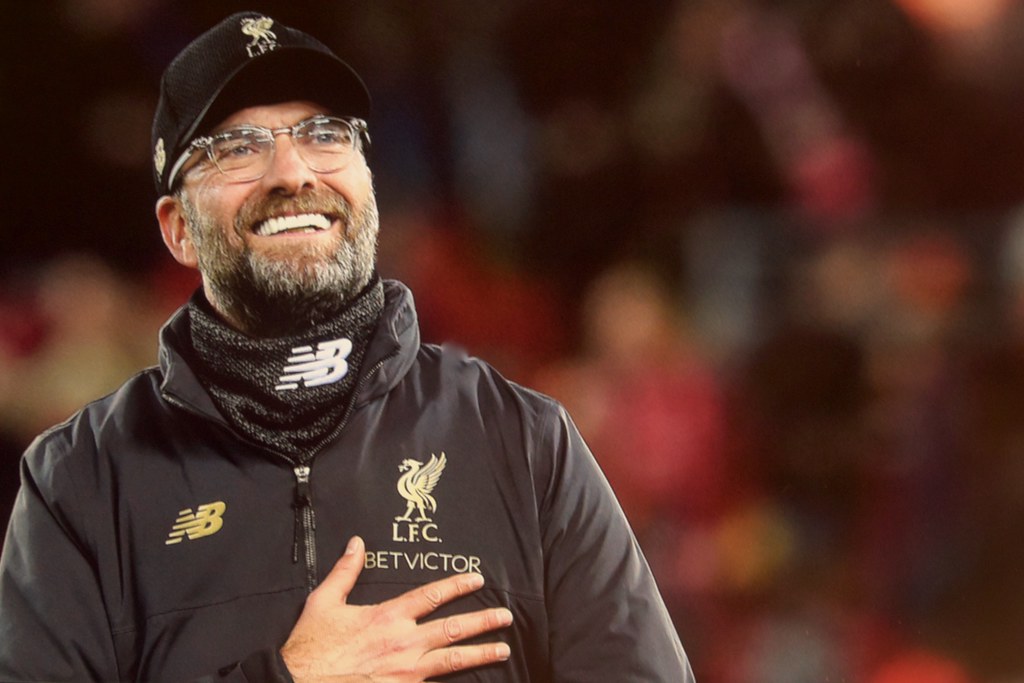
It would be a disservice to this team, however, to chalk the win up as little more than a freakish anomaly, a case of the opposition or the officials wilting when faced with the Anfield noise and the historic weight that underwrites the claims that it makes. As Klopp said in his post-match remarks, the success was made possible by a convergence of many factors at once: a crucial element, of course, is the sheer talent of the footballers in his team. It can be said with some confidence that this is the best Liverpool side of a generation.

They have now reached back-to-back European finals, and in the league look on track to finish with the third-highest top-flight points tally of all time. The very fact that they outclassed Barcelona in a 4-0 win should speak for itself – only the very best in the world can even stand a chance at achieving such an outlandish result. Messi, Suarez, Busquets, Alba, Ter Stegen – all of these are masters of their crafts, and the list could go on, and yet they were not merely nullified but decimated.


The quality is on display throughout this Liverpool team, from the back to the front. Alisson has proved to be the world class addition in goal that fans craved, and could well be the difference when they return to the final this season to right the wrongs from Kyiv – he played a pivotal role in ensuring Barcelona did not get a crushing away goal, thus contributing to overturning a 3-goal Catalan lead in the Champions League just as he did with Roma last year. There would not even have been a semi-final to salvage had he not produced a superhuman stop against Napoli way back in the final group stage game: football repeatedly confirms the cliché that it is a game of ludicrously tight margins, and elite players can provide the infinitesimal edge that makes the world of difference.


There is no shortage of such players in defence either – indeed, while the Brazilian had to be alert on a couple of occasions to repel Coutinho and Messi, the wall in front of him ensured he was not even as busy as he was at the weekend against Newcastle. Virgil van Dijk deserves all of the plaudits he is receiving: he was already worth every penny of his eye-watering price tag when he signed, but he has since matured into arguably the best defender in world football. When he hangs up his boots, he will be remembered as one of the greats of the game: he is that good. Messi, usually the master of creating pockets of space out of nothing, had no answer to him: the greatest of all time was anonymous.


The Dutch colossus was far from unsupported – Joel Matip has put in the quiet hard yards during this campaign to climb the pecking order, and has showed that he is by no means out of place against the very best. His skill set compliments Van Dijk’s to form a formidable partnership. They are flanked by unquestionably the two best full-backs in the country. Andy Robertson has been a revelation since signing for a meagre £8 million from Hull, and played his part in keeping Barcelona’s superstars quiet before being forced off at half time.  Klopp’s one real mistake over the two legs was leaving Trent Alexander-Arnold out of the first game, but the boy from the academy still had enough time to pull his team back from the brink in a way he has dreamed of since his days of spying on Gerrard at Melwood.


He set up the second, tirelessly closing down Jordi Alba before picking a pinpoint cross worthy of his idol – when Wijnaldum tapped in, the words of “hello, hello, here we go” seemed to echo down the years. The crucial fourth, the goal that decided the tie, also came courtesy of a piece of magic from the full-back; he showed the ingenuity and presence of mind to whip in a quick corner, catching Barcelona unawares and allowing Divock Origi to finish past Ter Stegen. It is hard to encapsulate with mere words what it means to see a local boy who understands the club so intimately playing a leading role in its revitalisation: he is surely an icon in the making.


The local link is something to be cherished, but what is even more precious is the extent to which the wider squad has bought into the ethos of the club. This is not a group of players just doing their job: one need only look again at Fabinho singing his heart out, or Gini Wijnaldum in tears, or the injured Mo Salah turning up to cheer on the impossible sporting a “Never Give Up” shirt. For this, so much of the credit must go to the one factor to which the manager did not draw attention: Jurgen Klopp himself.

He demands of his players what he demands of the fans; he requires a team of believers rather than doubters, a team who lives the game like he does and who can feed off the emotion of it and turn it into results. Those who do not want to commit fully must leave: Coutinho, pulled off after an hour and watching from the bench as the humiliation of his new side was completed, is the living embodiment of this. What remains is a side who will never say die, a group of players and fans who are truly Liverpool regardless of from where they come.  


By all accounts, they had reasonable grounds to write themselves off. In front of the defence the squad looked to be falling apart at the seams: Naby Keita was ruled out for the season just as he started to hit his best form, Alex Oxlade-Chamberlain missed out due to another minor setback following his long lay-off, and crucially the talismanic figures of Roberto Firmino and Mohamed Salah were both unavailable. To those outside of the bubble that Klopp has forged, there was no hope.

Within ten minutes, however, a stand-in had them ahead; Divock Origi has had remarkable peaks and troughs in his time at the club, but his recent fine form has come at such a pivotal time that he has earned the affections of fans for life. The loss of Robertson at the break could have dented this momentum – instead, his replacement scored twice in two minutes to restore parity in the tie at 3-3. Who knows what would have been had Suarez not been so intent on riling up Robertson, and Wijnaldum had never taken the field: once again, ludicrously tight margins. Origi’s second may have been made by Alexander-Arnold, but it still required an excellent finish; he showcased quick reactions to deftly divert the ball beyond Ter Stegen under the most pressured circumstances imaginable. With that flick, the impossible was accomplished.


Barcelona’s role in all this cannot be reduced to the mere victims of Liverpool’s onslaught, and the inquests as to how this was allowed to happen have already started in the Spanish press, but Jurgen Klopp and his warriors will not even be remotely interested in the verdict. In their minds, they know how this happened: a group of world class players gave everything they had, willed on by the fervent belief of 50,000 fans and millions more not in the stadium, inspired by one of the greatest managers of a generation. Sometimes this is enough for silverware, and sometimes it is not, but it is all that can be asked for – one more push in Madrid may well be enough to deliver the trophy that Klopp’s reign so richly warrants.  

 - @JamesMartin013


Wednesday, 10 April 2019

Liverpool 2-0 Porto: Put Some Respect on The Name


On Tuesday night, Liverpool triumphed 2-0 in the first leg of their quarter-final match against Porto. The fixture, a repeat of last year’s round of sixteen tie, was considered by many to be a formality – no team reaches the last eight in Europe’s elite competition by accident, however, and the Portuguese champions threatened on multiple occasions. A mixture of profligacy on the part of Marega and some important saves by Alisson kept Liverpool’s clean sheet intact, but wasted chances at the other end mean that Klopp’s men cannot go into the second leg with progression as assured as it was last season. Nonetheless, they have put themselves in a strong position to make it to the semi-final; this is a notable accomplishment in any campaign, but to do so while sustaining a challenge for the league title shows just how far this team has come in a short space of time.


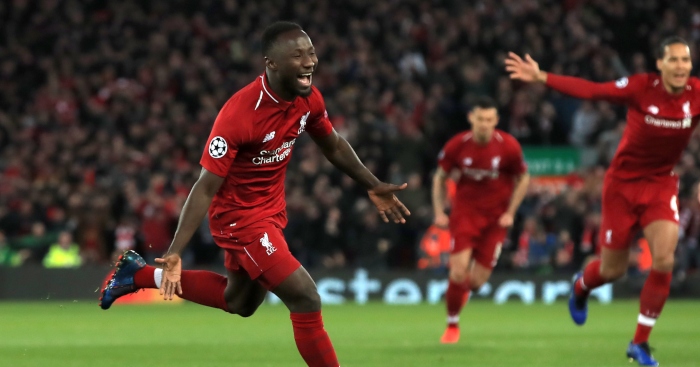
The Porto faithful had a haunted look about them when Liverpool took the lead after just five minutes. They had been here before – superior opposition turning up with both skill and luck on their side is a deadly cocktail, one that resulted in a 5-0 humiliation in their own back yard just fourteen months ago. When Keita’s positive drive forward was not tracked and his subsequent shot evaded Casillas courtesy of a huge deflection, there was a feeling that it might be a similarly long night. The players in red appeared to be gripped by a similar vision – at any rate, the waves of pressure remained relentless after going in front.  This made for an entertaining contest, but it exhibited the sort of naivety that is more closely associated with the Liverpool of a year ago. It was the kind of performance that can produce 5-0 wins, but is just as capable of resulting in the squandering of comfortable leads. The second leg of the Roma tie in the semi-final stage of this competition last season come to mind. On this occasion, however, the advantage did grow rather than evaporate: Porto had created and wasted a number of reasonable opportunities, but a glorious sweeping move up the pitch was finished off by Roberto Firmino to double the home side’s lead.


Alexander-Arnold chalked up the assist, but it was Jordan Henderson who truly made the goal. His delightful ball to the full-back gave the youngster the freedom of Anfield in which to pick out Firmino, who was left with the simplest task of the lot. The only surprise was that the Brazilian deigned to look at the ball when steering it in from a matter of yards. Liverpool’s captain has been enjoying himself of late in a more advanced position: Klopp’s growing faith in Fabinho as the sole man in a deeper role has allowed Henderson to move into more natural territory, and Liverpool are reaping the rewards in attack. The ease with which Porto created chances of their own might tempt Klopp into shackling his number fourteen with defensive duties once more when it comes to the Chelsea game at the weekend, but Henderson will feel that he has proved that he can be the answer to Liverpool’s problem of lack of creativity from the midfield.


He was not the only one making his case.


Naby Keita has been steadily growing in influence after a very stuttering start to his Anfield career. The season has been littered with the odd promising cameo, but there has often been a sense that he is playing within himself. The vital equaliser against Southampton, and the evident delight and relief it caused him, looked as though it might prove to be a turning point – even this goal, though, a header at the back post, was not exactly a realisation of the dynamic, all-action Keita that Liverpool fans had been promised. That player arrived against Porto. Per @DanKennett, the Guinean made six tackles, ten recoveries, six dribbles and two key passes – this is before his goal is even mentioned. This array of qualities, the sense that he is doing the job of two men, is what was so eagerly anticipated when Liverpool secured his signature; the recapturing of such form just as Jurgen Klopp’s side reaches the business end of its push for two of the biggest trophies in the sport could not be more well-timed.


Let’s consider that for a moment. It’s April, and the Premier League and Champions League are still very much up for grabs. This is a remarkable feat: on one level it is exactly where Liverpool Football Club belongs, but equally it is essentially unchartered territory in the context of the past two decades. Fans have generally had to content themselves with a push for one or the other, and often neither, and yet some supporters still have the temerity to bemoan the fact that the margin of victory was not so large as to allow players to be rested in the second leg. Of a Champions League last eight clash. That this team is now at the point where a 2-0 triumph in the business end of the European Cup is not a universal source of euphoria, and can even draw criticism, demonstrates the astonishing progress that has been made under Jurgen Klopp. For what it is worth, Liverpool fans should know more than most how fickle fortunes can be in football – there are real reasons to hope that this period of challenging will blossom into a genuine era of great success, but in the mean-time everyone should be consciously striving to enjoy the journey. Nonetheless, the fact that the bar has been so substantially raised is as clear an indication as any that this is a team back amongst the European elite. There is true quality from front to back: enough to dispatch of the likes of Bayern Munich, and to pile pressure on a City side that broke records for fun last season. Henderson’s defiant celebration against Southampton delivered a message to everyone doubting him as an individual, but also to those who doubt the team: it is time to put some respect on the name.


Of course, nothing is won yet, and with opposition of such elite calibre there are no guarantees that the campaign will end with silverware on either front. However, the belief within the team is tangible; not only tangible, but justified. It is hard to deny that the team is one of the best in Europe at the moment - Liverpool will not fear a potential semi-final meeting with Barcelona in the Champions League. On the domestic front, Klopp has nearly steered his side through the toughest spell of the season unscathed – a succession of potentially tricky fixtures while City’s run was favourable could have spelled the end for the title race, but through talent and tenacity Liverpool have relentlessly kept up the pressure. Victory over Chelsea at the weekend in the final against a side from the top six this season would be a massive psychological triumph ahead of Manchester City’s games against Tottenham and Manchester United in the space of a week, but thanks to the efforts of the challengers up to this point the match against Sarri’s men is not make or break in this regard. Whatever happens, the overwhelming feeling towards this team amongst fans must be pride: every last one of the supporters is dreaming of clearing the final hurdle that has proved a stumbling block since 1 
990, but even if it proves too high once more there can be no denying that every single member of the team has given absolutely everything they have. There is no more that can be asked.

- Follow me on Twitter @JamesMartin013
See my latest for Colossus Bets here: https://blog.colossusbets.com/author/james-martin/

Friday, 30 November 2018

PSG 2-1 Liverpool: Post-Match Thoughts


Liverpool travelled to Paris knowing that a win would secure their qualification from a very tough Champions League group. An admittedly formidable opponent stood in their way, but it might have been expected that Klopp’s men could have mustered more than one shot on target in their pursuit of the win that would be so vital. As it was, even that one shot came from the penalty spot. The first half in particular was lacklustre beyond belief; the spot kick at the death gave the visitors a lifeline that was frankly undeserved. There were some signs of improvement in the second period, but the penetration from midfield remained all but non-existent and Liverpool could not force the breakthrough.


There was a quiet pre-match optimism amongst the away fans. PSG are on a remarkable run, but it is not as if they have faced hugely stern challenge in Ligue 1; Liverpool deservedly won the reverse fixture, and knew they were at least in with a realistic chance of getting a result at the Parc des Princes. However, some of this hope was dented before a ball had been kicked – the team sheet revealed a midfield three of Jordan Henderson, James Milner and Gini Wjjnaldum. None of these players are bad: each of them has put in dominant performances in the past that can be brought to mind. Wijnaldum in particular was the heartbeat of the side that overcame Manchester City in last season’s Champions League. However, as a midfield unit, the three of them simply do not work. There is a big question mark over where the creativity will come from, and yet nor is there an out-and-out defensive presence in the mix. Each can keep things ticking over nicely, but with nobody to play the killer ball the entire front three might as well be taken out of the game.


This is essentially how it panned out. For the first forty-five minutes, PSG walked through Liverpool’s midfield as though it were not there: all it took was a string of two or three quick passes before Neymar and Mbappe were bearing down on the defence. This was admittedly not helped by a referee undoubtedly influenced by the home crowd – Liverpool could hardly make a tackle without going in the book – but it would be wrong to blame the officials entirely. Klopp must shoulder a proportion of the criticism; he chose to go with what might generously be called an ‘industrious’ midfield, but all of this industry provided essentially no protection to the back four. If the defence were to be left all but unprotected, the manager may as well have utilised his more creative forces in the shape of Shaqiri and Keita from the outset. Milner was probably the best of a bad bunch, and he coolly converted his penalty when called upon at the end of the half, but frankly none of them played at all well. The match was won and lost in the midfield battle, which in reality was more of a massacre than a fight – even if Verratti had got the red card which his horror-challenge warranted it is doubtful that Liverpool would have claimed the ascendency.


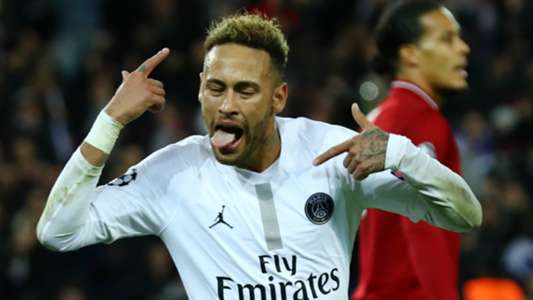
It cannot even be said that the problems were limited to the midfield. Both of PSG’s goals can be traced back to Virgil van Dijk – he can be afforded somewhat more slack given that he has been a colossus all season, but he looked as though he was playing with a hangover during arguably Liverpool’s biggest game of the campaign. The attempted clearance prior to Bernat’s opener was unacceptable at any level; he half-heartedly floated a foot at the ball, which looped up into an even more dangerous position than where it started. His role in Neymar’s goal was just as bad; the whole defence had been drawn out of position as a result of Gomez venturing forwards, but the Dutch centre-back was caught in two minds as to whether to go to the ball or stay with his man and ended up taking himself out of the game altogether. Alisson nearly bailed him out with a remarkable save, one of many that he made on the night, but his compatriot was on hand to tuck home the rebound.


The performance by Alisson was really the only significant positive. He simply had no right to make some of the saves he pulled off, most notably a remarkable reaction stop from a corner – it easy to see why Claudio Taffarel has marked him out as a potential world-beater. On another day, his immense showing would have opened the door for the front three to dig out an undeserved result; the lack of any kind of penetration from midfield did not make their lives easy, but such is their quality that more could reasonably have been expected of them. Mane was at least putting in the graft, and he was rewarded by winning the penalty, but the other two were very much off the boil. Firmino produced a few sharp turns here and there, but his passing was frankly awful in places; Liverpool fans could only watch on, frustrated, as some of their few promising positions were squandered with absurd cheapness. Salah was largely anonymous, and on the one occasion where he managed his trademark cut inside he dragged his shot wide at the near post. That proved to be largely indicative of the evening: chances were few and far between, and when they came they were wasted.


Klopp and his players can take some comfort in the fact that qualification remains in their hands. The permutations regarding the final game against Napoli are a little complex, but essentially either a 1-0 win or any victory by two goals or more will see Liverpool through to the knockout rounds. This is a tough ask, and Ancelotti is a shrewd operator when it comes to protecting an advantage – Istanbul of course stands out as a stark exception, and Anfield will be looking to draw on some of that spirit to will the team on against the Italian side. Liverpool’s home and away form stand in marked contrast so far this campaign: two wins out of two at Anfield, three straight losses on the road in Europe. Klopp has called upon the Kop to make a difference once again. Ultimately, despite the uninspiring Champions League performances so far, this is a side that deserves to be in the last 16. Hopefully the players and manager take a pragmatic approach to this loss, learn from it, and use it to ensure qualification on Matchday 6.
- Follow me on Twitter @JamesMartin013

A reminder that my weekly pieces can be found over at Colossus Bets: https://blog.colossusbets.com/7-points-in-7-days-eibar-to-clear/


Thursday, 18 October 2018

VAR and the Law


In the aftermath of VAR’s shambolic outing in Tottenham’s FA Cup meeting with Rochdale in February, Mark Thompson (@EveryTeam_Mark) penned a thought-provoking piece on the need to look at the laws of the game in the same way as the laws of the land. It argued that the rules laid down by the FA are open-textured, and that different valid interpretations are possible within the broad ‘statutory’ limits. This is perfectly true – as the famous professor of jurisprudence H.L.A Hart observed, it is an inevitability of the nature of language that rules will admit of more than one meaning. Further, even when the ‘plain meaning’ reading of a rule is clear, the context may change its application. However, this comparison suffered as a result of the absence of anything in football akin to precedent: once a rule is interpreted by a referee in one way, it is not applied consistently thereafter.


As such, within the context of a critique of VAR, the parallels between law and the rules of football were imperfect. Nonetheless, there is undoubtedly merit in drawing the comparison. The Video Assistant Referee technology most resembles a legal mechanism known as judicial review – this allows courts to check the decisions of officials and strike them down where appropriate. In this scenario, the official is the matchday referee: much can be learned about the legitimate scope of VAR by looking at the grounds upon which courts will interfere with administrative decisions.


The three broad grounds for judicial review, as spelled out by Lord Diplock in the case of GCHQ, are illegality, irrationality and procedural unfairness. The latter two are of only limited use in a footballing context. Procedural unfairness could certainly never function as a basis for overturning an on-pitch official’s decision – the referee is under no obligation to explain the process by which he arrives at a call, and provided it is correct there can be no prospect of a video referee overturning the decision. In other words, any review conducted by VAR is bound to be substantive. This still leaves open the prospect of irrationality; the standard of reasonableness review has changed over time, but it now broadly resembles the doctrine known as ‘proportionality’. This dictates that any decision must be a justifiable way of furthering a legitimate aim in order to be upheld. Perhaps this could be used to assess the validity of refereeing decisions taken in order to ‘let the game flow’, or to pursue other such abstract goals, but once the call of a referee is legal on its face it is generally unlikely to be sufficiently irrational to warrant being overturned.


Illegality is thus by far the most useful concept to consider in relation to VAR, and it moves closer to the points touched upon in Mark Thompson’s initial piece. However, the video referee is not best thought of as an appeal judge looking afresh at the meaning of the relevant law; he is conducting judicial review, examining whether the referee’s decision was one that was appropriate for him to make. When will a referee’s decision be ‘illegal’? Are all decisions that are adjudged to be incorrect inherently beyond the authority of the referee, or do the laws of the game act as empowering statutes that give each referee a degree of discretion? These questions have been considered in the context of judicial review, and the answers that have been given shed some light on the extent to which VAR should interfere.


Judges are always wary of conducting what is known as ‘de novo’ review. Their role is not to ‘substitute judgment’, replacing their own opinion for that of the initial decision maker – rather they must decide on the validity of the first-instance decision-maker’s actions. Prior to a case called Anisminic, only decisions that were outside the jurisdiction of the official in question would be overturned; this is patently too deferential to function in a footballing context, where all of the decisions made by a referee are his to make even if he gets them wrong. Ultimately, it was adjudged to be too deferential for judicial review as well – error of law is now a valid ground for interference. However, this leaves the question of how to define an error of law. The reviewing court cannot simply look at the decision afresh, apply the law as they see it to the facts and foist this verdict upon the initial decision-maker; this would amount in practice to de novo review. Rather, they must take as their starting point the initial decision, and ask whether that falls within the scope of the relevant statute.


This is a tightrope. The court (VAR) are not asking whether the original decision is plausible – if an interpretation is understandable but nonetheless wrong it must still be struck down as illegal. Rather they are asking whether, given the open-textured nature of the law touched upon earlier, the decision can be called wrong at all. Thus, a video referee may disagree with an on-field referee’s call, but nonetheless reach the conclusion that the relevant law admits of both conclusions. Wherever this is the case, VAR should leave the original decision intact. This is not the crude ‘clear and obvious mistake’ standard often bandied about by pundits; it is a standard that advocates correction of all mistakes, but a narrow conception of what is meant by ‘mistake’.  Just as in a legal context the case-load concerns and the desire to uphold the legitimacy of administrative bodies warrants giving the original decision-maker some space within which to operate, the need to keep games flowing and respect the position of the referee necessitates a degree of deference from VAR. Particularly where a decision hinges on standards of ‘recklessness’ or ‘dangerousness’, it is unlikely that a decision could genuinely be called wrong: indeed, Jones v First Tier Tribunal involved the issue of recklessness and returned the verdict that reviewing bodies should be slow to find an error of law.


It is often said that VAR comes into its own when there is an objectively verifiable mistake of fact that needs to be corrected. As luck would have it, this is the precise standard required by judicial review in order to intervene based on an error of fact (E v Home Secretary). Provided a factual error that played a material part in the original decision can be shown, the law says that it is justifiable to overturn that decision. This is where VAR can thrive; in the world of judicial review objectively verifiable errors of fact are a relative rarity, but video technology is excellent at providing such verification in a sporting context. Thus, from a purely legal perspective, there can be few complaints with VAR’s correction of factual mistakes.


In summary, the debate as to the proper extent of VAR bears a striking resemblance to that relating to the appropriate extent of judicial review. This comparison paints the referees as decision-makers empowered by the laws to make decisions; these should only be offset where it can genuinely be said that a decision goes against those laws, or where it has been taken on the basis of a mistake of fact. Whether the footballing context calls for more or less deference, or even for no review at all, is a question that cannot be answered purely by drawing parallels to law - nonetheless, the legal framework provides a good starting point for discussion as to what exactly VAR is trying to achieve.

Friday, 5 October 2018

Salah: Stick or Twist?


Mohamed Salah’s mercurial form last season saw him finish not only as the Golden Boot winner and record goal-scorer in a 38-game season, but as the highest scoring player ever in a Fantasy Premier League season. In response, the powers that be slapped a 13-million-pound price tag on his head for the 2018/19 campaign. Many managers – over 2.4 million of them, in fact – did not think twice about splashing 13% of their budget on the Egyptian. After all, if he even came close to replicating last season’s numbers he would repay the investment in kind. So far, however, he does not look like the Salah of 2017/18. A number of squandered chances has left many people’s patience running thin, but the big question is this: stick or twist?


Let’s start by looking at the raw numbers. After seven games last season, Salah had netted four times in the league and assisted two further goals. Arsenal and Manchester City were the stand-out games in a relatively kind run; this allows for a near-direct comparison to this campaign, where Liverpool’s fixture list has thrown up tough clashes against Chelsea and Spurs in amongst some more routine matches. In these seven games, Salah has notched three goals and two assists: the numbers are nearly identical to last year. Of course, the missed chances last season could be explained away as a period of adaptation for Salah at his new club – with this excuse no longer available, it is natural to ask whether this relatively pedestrian start by Salah’s high standards is set to continue beyond the opening few games. However, it is at the very least reassuring for Salah owners that he is pretty much on par with the start he made to his record-breaking campaign.


It is also true that Salah’s squandering of big chances is nothing new. It was well-publicised, mostly by jealous opposition fans, that Mohamed Salah missed the most clear-cut chances out of anybody in the league last season – he was scoring for fun, but was missing his fair share too. This started from the very first game at Watford, where he probably should have had a debut hattrick; it is a product of Liverpool’s high-octane attacking play. There were fantasy managers at the time who were scared away by this wastefulness, but they were quickly made to rue it. A huge part of Salah’s appeal lies in his movement and unerring ability to get on the end of chances. The most important question is whether he has continued to do so this season. He undoubtedly has: the wastefulness that has so frustrated his owners in FPL is equally a sign that he is still doing everything right bar the finishing. This is little consolation to those who have seen a damning ‘4’ by the name of their captain for three of the last four weeks, but it should discourage these owners from selling. Every indication is that the goals will soon come.


This theory is backed up by the upturn in Liverpool’s fixtures in the near future. While it has not been the most taxing start ever faced, Klopp’s side have had the toughest fixtures of any of the top four so far. A difficulty calculation based on league positions puts Liverpool on seventy-five points, while Chelsea are on 60 and City sit on a mere 45.  After they face their biggest test yet at the weekend against Guardiola’s men, things start to look a lot more promising for Liverpool in terms of points potential. A run of Huddersfield, Cardiff, Arsenal, Fulham and Watford is about as good as it gets for Klopp’s side – each are set up with vulnerabilities just waiting to be exploited by Liverpool, and any one of those matches could plausibly end up with the Reds netting four or five. Even after this, a sequence of Watford, Everton, Burnley and Bournemouth awaits: the points potential here is perhaps slightly less huge, but the difference is marginal. If there was a time to sell Salah, it was surely three weeks ago rather than on the cusp of one of the kindest runs any top side will ever face.


However, there are of course valid concerns about hanging on to Salah. Most of them are the same ones that existed before a ball was even kicked – £13 million is a huge proportion of the budget, and there might well be better ways to spend it. The goalscoring form of Sadio Mane makes him a viable alternative for a saving of around 3 million, while Eden Hazard is scoring excellently for Chelsea. Kevin de Bruyne’s return will provide another premium option, and Raheem Sterling appears to be a regular in City’s setup once more after a relatively gradual reintroduction to the team following World Cup duty. Equally, sacrificing Salah for a more budget midfielder is one obvious way of accommodating both Kane and Aguero up front: experience teaches us that this is a pretty reliable front two. There is no easy answer, just as there was no one correct way of doing things right from the start: what is clear is that if Salah is to be rejected on the basis of his relative lack of value, it should not be a decision informed too heavily by his relatively steady start.


There is one fresh concern that has only arisen since the start of the new season, and which may be enough to tip the balance for some people in favour of getting rid of Salah. Rotation of Liverpool’s front three was already likely around European matches, particularly since they acquired more depth in the squad over the course of a positive summer. Specifically, Xherdan Shaqiri’s arrival from Stoke posed a minor risk to the reliability of Salah’s league minutes – this was only a slight concern, however, given that the man dubbed the Egyptian King seemed nigh-on undroppable based on his form from the end of the last campaign. This is no longer the case, as seen by Klopp’s withdrawal of Salah after 65 minutes against Chelsea. Perhaps even more significant is the remarkable renaissance of Daniel Sturridge. His recent form demands game time, and over the course of the kind run of league games he is bound to be handed some starts; this could be at the expense of any one of the front three, or else in a 4-2-3-1 that accommodates all of them, but there is no denying that his resurgence places more question marks than ever before over the safety of Salah’s consistent place in the side. On its own this concern is not great enough to prompt owners to sell, as Salah will surely continue to feature in the vast majority of games, but it is another thing to think about when weighing up the various pros and cons.


On the whole, it would be wise for Salah owners to give him at least a few more weeks. His underlying performances promise a glut of goals before too long, and a very kind run of fixtures might be precisely what is needed to get him back on the sort of form that saw him priced at £13 million in the first place. The fact that others are panic-selling only increases his appeal – Salah as a differential is an exciting prospect. There are many tempting ways of spending the savings from leaving him out, and some of these alternatives may end up being the better way forward, but even with all of his misses it is a fairly safe bet that Salah will ultimately deliver for those that keep him.


Check out my other recent pieces:
Ruben de la Red: https://footyanalyst.com/ruben-de-la-red-a-legends-career-cut-short/