Showing posts with label moreno. Show all posts

Sunday, 26 November 2017

Liverpool 1-1 Chelsea: Post-Match Analysis


A familiar feeling descended upon Liverpool fans as Willian’s failed cross looped over Mignolet and into the back of the net. Once again, a combination of lack of composure and sheer bad luck had served to deny the hosts all three points; the end result was no doubt respectable, but the all-too-common circumstances in which the win slipped away make it hard to appreciate the value of a point. Nonetheless, there are certainly positives to be taken – Klopp’s men were five minutes away from getting a win against the champions while resting two of the team’s key players, suggesting that the squad is finally equipped to handle the congested winter fixture list. Moreover, the league table reveals that Liverpool remain firmly in the hunt for a Champions League spot – anything from second to sixth is realistically up for grabs, with the teams occupying those positions moving amongst themselves almost weekly, and this is likely to remain the case for essentially the entirety of the campaign.

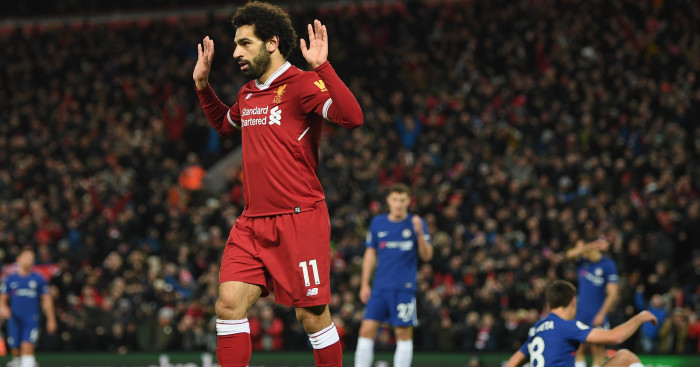
The team selection for this big game certainly raised a few eyebrows. There was consensus that Mane and Firmino could benefit from a rest – Mane has twice been thrown back into action off the back of injuries, and Firmino’s role in Klopp’s team necessarily results in vast amounts of energy being expended. However, most would have expected the rotation options to be called upon in midweek against Sevilla; the upcoming game against Stoke would have provided an equally ample opportunity. Ultimately, though, it can only be a good thing that the manager now feels he has squad players who can realistically be trusted in even the most important games. One would hope, having spent forty-million pounds on Oxlade-Chamberlain and blocked a move away from Anfield for Sturridge, that there would be no complaints when the two actually get picked. The complaints that were voiced in respect of Oxlade-Chamberlain were quickly silenced – he started brightly, and continued in this vein throughout the match. He refused to allow Chelsea’s back line much time on the ball, and when he was able to win it back he used it well. Just as satisfying as his bursting runs were his decisions on occasion to shift the ball infield; it was his most mature, composed performance since joining from Arsenal. This was rewarded with an assist – he helped to finally break the deadlock midway through the second half by instinctively poking the ball through to Mo Salah, who did what he has been doing for fun ever since joining and stuck it in the back of the net.

Sturridge was not quite as emphatic in his silencing of the doubters – it wasn’t necessarily a bad performance, and indeed only an excellent Azpilicueta block denied him a goal to double the lead, but the absence of Firmino was marked. Salah was seldom found in space; he was forced to engineer it for himself, rather than relying on the movement of the centre-forward to open things up. On multiple occasions the Egyptian spun past Cahill with ease, only to find more bodies ready to get between him and the goal – Sturridge’s lack of intelligent movement is at least partly to blame for this. As ever, this comes with the disclaimer that Sturridge’s class remains beyond question – the questions about whether he can genuinely play a role in Klopp’s system, however, are becoming ever more pressing (excuse the pun).

The more immediately concerning problems were to be found in midfield. Milner, Henderson and Coutinho were deployed in a central three; this naturally took the form of a double-pivot in reality, with Coutinho drifting around further up the pitch. The protection offered to the defence was virtually non-existent – Henderson failed to follow up from his poor showing in Sevilla with a convincing display here, and was bypassed as if he wasn’t there on multiple occasions. Milner was even worse; Henderson is at least fairly reliable in possession, but the ex-City man subjected Liverpool to near-relentless pressure in certain spells through his failure to retain the ball. Coutinho, too, is not free of blame – in the first half he flatly refused to track back a lot of the time. This is obviously not his primary duty, but he should have taken some responsibility for limiting the space in which the Chelsea forwards could operate. Hazard in particular needed to be tracked a little more diligently – the Belgian was given the space to excel in the first half, and in fairness he looked exceptional. Indeed, Coutinho’s second half showing illustrated the importance of his defensive contributions; he started to get back a little more, and this coincided with significantly fewer chances for the visitors until the final twenty minutes.

It was in this final period that Liverpool were undone, as they had been against Sevilla. Unlike the Champions League game, it was not a complete self-destruction; Klopp’s side were undoubtedly guilty of backing off too much, and of abandoning much of the composure and discipline on the ball that they had exercised prior to scoring, but it was ultimately a mishit cross that gave Chelsea their breakthrough. It would be ridiculous to assign any genuine blame – the cross came in from Moreno’s side, but he was not really at fault. In fact, on the whole, the Spaniard responded excellently to his disastrous showing against his former club: he dealt admirably with what was at times a barrage down his left flank. It simply wasn’t to be for Liverpool. Such strokes of luck cannot be legislated for; whilst there are undoubtedly ways in which the team could have managed their lead more effectively, which absolutely need to be addressed going forward, their undoing was just a fluke in the end.

Where does this leave the team? It is a case of having to just move on, and do so quickly; the game against Stoke is looming on the horizon, and a win is important to get back on track following two disappointing draws. The players will surely take heart from the fact that the point has not left them in a dire position by any stretch of the imagination; the table accurately reflects that City have been dominant and the chasing pack have been much of a muchness. The battle for the top four will be a long one, and Liverpool will be encouraged by the fact that on most days they will not be faced with crosses that fly into the top corner.

- Follow me on Twitter @JamesMartin013


Monday, 18 September 2017

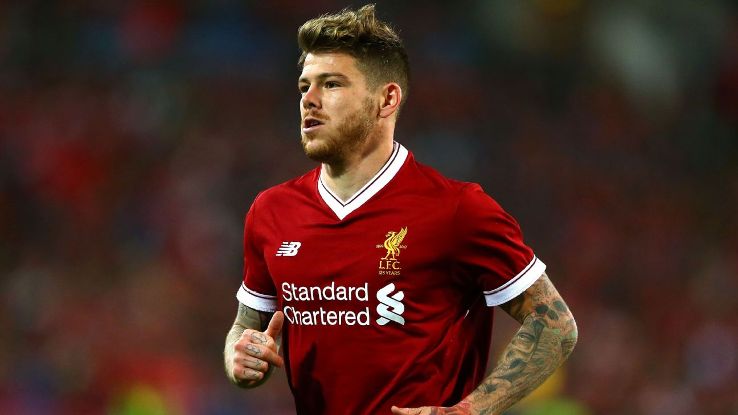
Alberto Moreno: Now or Never

With his baby face and boyish charm, you would be forgiven for still thinking of Alberto Moreno as Liverpool’s promising, exciting young prospect from Sevilla. In reality, he is twenty-five: gone are the days when he could be legitimately thought of in those terms. There is no exact science to when a player enters their prime, of course, but give or take a couple of years Moreno should be approaching his peak. It is therefore a pivotal time for him, both in terms of his place in the Liverpool squad and his career as a whole – he has the raw attributes to be one of the best, but the clock is ticking in his quest to achieve that goal.

The Spanish left-back was born and bred in Seville – he lived there throughout his childhood, much of which was spent in Sevilla’s academy. He was picked up following victory with Spain in the Danone Nations Cup, an international tournament for children aged ten to twelve. It is unsurprising that the La Liga side looked to nurture the talent in Moreno: he is blessed with blistering pace and surprising strength, meaning he was always going to be a good bet to make it as a full-back. Sure enough, he graduated to Sevilla Atletico – the reserve side – while still a teenager. It did not prove too big a step up for the local boy: he netted an impressive four times from thirty games in his debut season, a highly respectable return that firmly established him as a marauding kind of defender. Indeed, coach Ramon Tejada sometimes utilised Moreno as an attacker to harness and hone his clear prowess going forward. He also looked generally good defensively, although there were a few question marks surrounding his disciplinary record.  

Nonetheless, his form was enough to earn him an opportunity with the first team before too long. Still only 19, he made his debut in 2012, coming on as a substitute in a 1-0 defeat to Athletic Bilbao. He made fifteen further appearances in the 2012/13 season, twelve of which were starts – given that the fire sale at Sevilla was not until the following summer, it was highly impressive that Moreno was able to secure a spot in the senior side so rapidly. He was no doubt helped by Antonio Luna’s loan move away in the second half of the campaign, but this should not detract from the quality of his performances: he impressed enough to make Spain’s squad for the u21 European Championships.

It was here that he truly exploded into the continent’s footballing consciousness. He played all but one game in Israel as Spain defended their title, only missing a meaningless match against The Netherlands after qualification from the group had already been secured. His performances earned him a place in the Team of the Tournament: he was a genuine stand-out player, which is no mean feat considering he was playing alongside a host of future stars such as Alvaro Morata, David De Gea, Dani Carvajal, Koke, Thiago and Isco. The score-line of 4-2 in the final against Italy perhaps hinted at some weaknesses in his defensive game, but he did contribute to a respectable three clean sheets; one of these came against a strong Germany side, featuring Moreno’s future teammate Emre Can. Such was the level of his performances, he was named in the provisional 30-man squad for the 2014 World Cup – Carvajal and Koke were the only other two outfielders from the u21s to make it to this list.

Despite making his first senior international appearance in the final qualifier against Georgia, Moreno did not make it to the final 23-man squad for the tournament in Brazil. This, however, was not a comment on his club progression but on the level of competition for places in the Spain squad. The 2013/14 season was a breakthrough one at Sevilla: Moreno was the undisputed first-choice at left-back, and continued to put in eye-catching performances on the way to a Europa League triumph.

It was on the back of this that Moreno, then 22, got his move to Anfield. Liverpool had just come agonisingly close to glory of their own, falling excruciatingly short of their first Premier League title. A clear weakness in the title push was left-back, a slot which had been filled by Aly Cissokho: the Moreno transfer was therefore met with excitement and enthusiasm amongst fans. His start did nothing to dampen these expectations; his debut came in a 3-1 loss to Manchester City, but he followed this up with an exceptional individual effort during a 3-0 dismantling of Tottenham. It was the kind of run that evidenced his occasional outings as an attacker at youth level – following a strong challenge to dispossess Andros Townsend he powered up the pitch, leaving the winger for dead and finishing unerringly into the corner before Kaboul could get across to cover.

As was almost inevitable for a young player upon whom the fans had placed so much expectation, things did not continue in such excellent fashion. The obvious attacking talent remained clear for all to see, but the old defensive frailties increasingly began to frustrate the Liverpool faithful. In particular, his positioning came under a fair amount of scrutiny. He was far from the only one leaving the fans feeling flat, however: the whole team underperformed, only managing a sixth-place finish.

Despite the setback, Moreno entered the 2015/16 season as the clear first choice. This in itself was an achievement of sorts for a young man still learning his trade – nonetheless, the campaign ended in the nadir of the Spaniard’s Liverpool career. Things on the domestic front were worse than ever: Liverpool limped to a catastrophic eigth-placed finish. They had the chance for redemption, however, in the form of the Europa League final. It offered the tantalising prospect of a return to the Champions League, and a first trophy for new boss Jurgen Klopp. Who were the only team standing in their way? Sevilla. This was the kind of irresistible personal narrative that football so often seems to create, and on this occasion the story did not end well for Moreno. All was going to plan in the first half, with a lovely strike from Daniel Sturridge giving Liverpool the lead, but the second half saw the English outfit collapse to a 3-1 defeat. Moreno played a significant part in this capitulation. His head did not seem in the right place against his former club, and he ended the season out of favour with both fans and management.

This was made clear by Klopp’s choice to convert James Milner into a left-back ahead of the 16/17 campaign. At a time when he would have been hoping to flourish, Moreno was relegated firmly to second-choice. This did shore things up at the back to some extent, and Liverpool belatedly got their Champions League spot courtesy of a top four finish. Following this, the club invested in bringing Andy Robertson in from Hull – this appeared to spell the end for Moreno.

Not so. The scrappy Spaniard refused to accept that his Liverpool career was over, and Klopp was more than happy to keep him on the books over the summer. Robertson’s arrival has actually worked in favour of Moreno: having two designated left-backs at the club has allowed Klopp to take Milner effectively out of contention in that position, leaving Moreno and Robertson to compete for the spot. It seems as though both will be given opportunities over the course of a long season fighting on multiple fronts: Moreno has established himself as the first-choice for the time-being.

Happy ending? That still remains to be seen. Moreno has won over the boss again, and also has a fair portion of the fans backing him once more. He appears to have matured; he reflected candidly upon the infamous Sevilla game in a recent interview, noting that everyone has bad games and must look to grow from them. This maturity is at least partly reflected in his play – the marauding runs that endeared him to the fans in the first place remain, but the defending is perhaps a little less kamikaze than it once was. Nonetheless, many remain unconvinced: although a lot of the problems down the left side can be attributed to Lovren, it is hard to deny that Moreno continues to play a part in the defensive frailties of the team.

At twenty-five, it seems naïve to just confidently state that defensive nous will come with experience. He has made some improvements in that area, but there comes a point where it needs to be accepted that Moreno simply isn’t a defensive full-back. Moreno and his club must embrace the fact that he occasionally leaves something to be desired on the defensive front, acknowledging that the trade-off is what makes him arguably the best attacking left-back in the league. His pace is simply staggering – there are very few who could consistently provide overlapping runs for Mane as he does. He can finish, too: the Spurs game was where he first showed it in Liverpool colours, but his goal record has been good for a defender throughout his career. Questions can sometimes be raised about his decision-making in the final third, but when he does opt to pick a pass or cross it generally finds its mark. The trouble is that this all gets overlooked when his prowess at that end of the pitch is the very thing that sometimes leaves a Moreno-sized hole at the back, much to the frustration of the fans.

What, then, is to be done? One of two things needs to happen in order to earn Moreno the plaudits he is more than capable of receiving. The first (and less radical) option is for Liverpool to buy a highly capable left-sided centre-back: this is something the fans are crying out for in any case, and the ongoing interest in Virgil Van Dijk suggests it could be on the cards in the near future. Such a player would provide the cover to allow Moreno to bomb forward with total freedom, safe in the knowledge that he can leave a gap from time to time without being punished for it. This would allow him to unleash his full range of attacking talents, and would see him earn the recognition he deserves as an elite player going forwards. The second option is one that sadly could not be pursued at Liverpool: conversion into a winger. The presence of Mane, Salah and Oxlade-Chamberlain makes the idea a non-starter at his current club, but elsewhere he could thrive if deployed further up the pitch. The comparisons to Bale, who also left much to be desired defensively when used as a full-back, are irresistible – that is not to say that Moreno could find himself at Real Madrid within the next couple of years, but he has all the underlying attributes for a similar sort of transformation.

As a Liverpool fan, I hope the first route is the one taken. The club have a very good player on their hands in Alberto Moreno, and if he keeps working hard and is provided with a competent central defender on his side he is capable of excelling in the Premier League. He could yet become the player we all thought he might end up being when that ball hit the back of the Spurs net.


-        -  Follow me on Twitter @JamesMartin013 

Thursday, 14 September 2017

Liverpool 2-2 Sevilla: Frustrating Result, But Plenty of Positives

Liverpool’s long-awaited return to the Champions League failed to live up to the hopes of the fans, as the team slipped to a 2-2 draw at home to Sevilla in the opening group game. Sadly, however, it probably did live up to expectations: the hosts dominated, but defensive frailties were once again exploited. This has become an all-too familiar story, despite Klopp having plenty of time to rectify it: the frustration of another two points lost through abject defending clouds the positives from what was in many respects an excellent showing.

Liverpool started the stronger of the two sides; Mane and Salah both found themselves in one-vs-one situations against their full-backs within the first few minutes, neither of whom looked comfortable dealing with the pace and trickery of the Liverpool wide men. However, it was the Spanish side who opened the scoring with their first attack of the game – lack of defensive assertiveness from the midfield allowed the ball to find its way over to the flank all too easily, and Lovren comprehensively failed to deal with the subsequent ball across the face of goal. Ben Yedder was on hand to turn the ball home. Karius, whose selection ahead of Mignolet raised some eyebrows, couldn’t have done anything: it was those in front of him left with serious questions to answer.


The attackers certainly did their best to answer these questions, or at least make up for the defence’s inability to answer them. They looked in scintillating form, and it felt as though it was only a matter of time before Liverpool drew level. Sure enough, Klopp’s men equalised in the 21st minute: Henderson worked it wide to Moreno, who squared it delightfully for Firmino to turn home. The left-back was excellent throughout the game against his former club, particularly going forward – he and Mane looked a constant threat to Mercado, who picked up a yellow trying to stop them and was lucky not to see a second. It was the other side, though, that brought the goal to give Liverpool the lead. Mo Salah showed great tenacity to dispossess Steven N’Zonzi. It was probably a foul, but he played to the whistle and reaped his reward: he pulled the trigger and his shot deflected wildly of Simon Kjaer and into the back of the net. It was a freak goal, but no less than the performance deserved. Indeed, it probably warranted more – Firmino had the chance to give Liverpool a two-goal lead from the spot heading into the break following a blatant foul on Mane, but the Brazilian struck the post.


This proved costly. Things didn’t come quite as easily for the hosts in the second period – the wide men were not nullified as such, but Sevilla had certainly adjusted to limit their threat. They continued to knock on the door, and in truth still looked the better side, but there was always a nagging feeling that not getting the third would be a problem. Such is the effect of having a mediocre defence: confidence in seeing out a lead is an alien feeling to Liverpool fans. Sure enough, Sevilla found a way through in the 72nd minute: Henderson lost his man, Lovren and Matip were too far apart and the ball was slotted through the gap and into the path of Correa. He made no mistake past the once-again helpless Karius.  There were a couple of subsequent extremely nervous moments, made no easier by the late dismissal of Joe Gomez, but the game ended 2-2.


A point on the board against the toughest opponents in the group is far from tragic, particularly given the 1-1 draw in the game between Spartak and Maribor. Equally, the performance was a long way from bad: the attacking build-up play was thrilling to watch, with the final ball or finish the only thing lacking on many occasions. This can be worked on in training, and will also improve once Coutinho is fully reintegrated to the starting eleven – once this begins to click, we could be looking at a truly lethal attacking force. However, even while heaping praise on the attack, the shadow of the defence looms: they are seemingly beyond help on the training ground, which begs the question of why on earth Klopp did not recruit upgrades in the summer window. Lovren is sometimes unfairly vilified, but this was not one of those occasions: he turned in an abject performance which undoubtedly contributed to dropping two points. Van Dijk would have been an ideal solution, but he was surely not the only one – thrilled as most fans are to have Klopp at the helm, he cannot escape criticism for this frankly bewildering oversight. Matip, on the other hand, had a good game – it was an archetypal ball-playing centre-back display, and in truth he was a more effective playmaker than most of the midfield. This does not apply to Wijnaldum, who came up with undoubtedly his best performance of a season that has been underwhelming up to this point.


Clearly, then, there were lots of positives. The attack is genuinely capable of becoming one of the best front threes in world football, and the midfield has players who on their day are all capable of offering admirable support to the build-up play. The defence is still a centre-back short of even being considered competent, however: having failed to recruit once again, it is hard to see how this changes before January. This leaves a very bitter taste from a performance that, in truth, was not bad at all.

Tuesday, 18 August 2015

Liverpool 1-0 Bournemouth: Post-Match Thoughts


Two games into the season, I’m getting a real sense of déjà vu. Despite missing our star striker we’ve opened the campaign with two victories, albeit unconvincing 1-0s. The parallels from 2013/14 are clear, and if this season pans out like that one did then I for one will most certainly not be complaining! It is a little too early for talk of title races though; on the whole Liverpool have been largely uninspiring, and there was a definite hint of fortune about the victory over Bournemouth.

The visitors took the game to Liverpool from the off: Eddie Howe opted to play two strikers up top, and they caused real problems in the opening 20 minutes. King and Wilson seemed to have the beating of the LFC back line – their pace got them in behind, and there were a couple of nervy moments early on. The worst of these came after Wilson absolutely embarrassed Lovren with a nice bit of trickery, drilled a shot in at the near post and won a corner. The ball was subsequently whipped in, and Elphick headed it home; it was no more than the Cherries deserved, but the officials ruled it out, deeming that the Bournemouth man had fouled Lovren while jumping. This was a harsh decision at best: Lovren made the most of minimal contact having realised he’d lost the header.

This incident did seem to shake Liverpool out of their reverie somewhat. After a couple more waves of attack from the away side the Reds got their act together, and were soon creating a few chances of their own. Benteke was being utilised much better than he was at Stoke, and the big man won multiple knock-downs that were picked up by teammates. His pressing was also excellent; he fashioned a few chances out of absolutely nothing by robbing defenders of the ball deep inside their own half. Even so, there weren’t really any clear cut opportunities. Lallana seemed loathe to utilise any of the space he worked for himself, preferring instead to turn back into trouble, and Coutinho was not having a particularly good game by his standards either – as such, creativity was limited. Somewhat unexpectedly, however, Liverpool did make the breakthrough in the 26th minute. A short corner was worked out to Henderson, who whipped in a great ball. Coutinho went for it and missed, but Benteke was lurking at the far post to knock home. Unlike Bournemouth’s disallowed goal, this one shouldn’t have stood: the Brazilian’s attempt to play the ball should have prompted the assistant to raise his flag. Still, the home crowd weren’t complaining – they roared their approval of the goal, which to be fair was no more than Benteke deserved on what was an excellent home debut.

From here on in Liverpool did a fairly good job of controlling proceedings – they came close to doubling their lead minutes after the goal through a sublimely controlled first time volley from Henderson, and the skipper then had a penalty shout turned down after a push in the small of the back. Half time saw another slight shift in momentum in favour of Bournemouth, but Liverpool began to control the pace of the game a lot more, and saw out the rest of the match fairly comfortably.
their attacks were handled well; throughout the game they were only allowed two shots on target. Clyne in particular was immense – he contained the threat of the rapid Max Gradel excellently, putting in a few amazing tackles. This defensive prowess combined with an extremely potent attacking threat is what makes Clyne such a brilliant signing: the days of Glen Johnson as first choice right back seem like a distant nightmare now. Much like in the first half, Bournemouth’s attacks lost momentum about twenty minutes in –

One extremely interesting change made by Rodgers in the latter stages was the introduction of Moreno at left wing. He was brought on in order to provide extra protection down the left side (Gomez, though still solid, did not look quite as assured as he did vs Stoke), and he did this admirably. He put in a couple of great challenges, breaking up a lot of would-be promising situations for Bournemouth. However, it was what he did going forward that really got me thinking. Freed at least partially from his defensive shackles he bombed up the left side, terrorising defenders with his pace and positivity. It would not be an exaggeration to say that he has been our best performing winger so far this season – never sure whether he’d sprint down the line or jink inside, the Bournemouth back line simply could not contain him. We know he’s capable of finishing; one only needs to hark back to his marvellous goal at Spurs. Maybe, then, he could reinvent himself; with rumours rife that he is now firmly second choice at full back, could he rejuvenate his Liverpool career as a winger? This change between positions has been done to great success in the past: while it would be a huge claim to suggest that Moreno could be as good as Bale, that is certainly the model of transition he would be looking to emulate. There have never been any complaints about Moreno’s talents going forward; defensive positioning has always been his issue. Surely it follows, therefore, that without having to worry about defending he could be a truly excellent wide player? This substitution would appear to suggest that the same thought has crossed Rodgers’ mind, and I for one hope to see a lot more of Moreno here as the season progresses.

Put bluntly, however, Moreno’s cameo was one of the few highlights in an otherwise average performance. Of course, the most important thing is the win, especially at this stage – racking up some early points can be a huge confidence boost. That said, we’ll have to play better than that if we want to get anything from our trip to the Emirates on Monday. Admittedly Arsenal are enduring a rather shaky start, and their back line are there for exploiting, but Liverpool look equally vulnerable. Firmino should be fit to start by next week; hopefully his flair and ingenuity inspires us to create more chances. It really is exciting to think that he and Sturridge are still to be integrated into our side – even without them (discounting a couple of Firmino run-outs) we have put together back-to-back wins and shown flashes of immense quality, which begs the question of what we are capable of with a full strength starting eleven. Could we be in for a 2013/14-esque season? Perhaps not, but a few more good results and Liverpool might just start to make us dream once more. 
-James Martin

Follow me on Twitter @JamesMartin013

Wednesday, 27 August 2014

Manchester City vs Liverpool: Post-Match Thoughts


Yesterday, Liverpool faced their first big challenge of the season when they came up against Manchester City. Despite being the clearly superior team for large parts of the game they could not capitalise, and the clinical Manchester City ended up winning 3-1.

Much like our game against Southampton last week, Liverpool failed to make their trademark fast start. It’s disappointing to see this element of our game disappearing, as it was this that allowed us to be practically home and dry in some games after just half an hour last season. That said, we were into our rhythm before too long. After five minutes or so of having the lions share of possession, City were pushed back, and Liverpool started to get on top. Daniel Sturridge created one of the best opportunities, beating Vincent Komapny excellently with some skill then forcing a smart save out of Joe Hart at his near post. Despite all the pressure, Liverpool failed to make a breakthrough. This was, in part, down to some good defending from the reigning champions. However, the system of using a lone striker may also have played a part. Sturridge looked isolated for large parts of the game, and Coutinho’s poor performance meant the play from midfield into attack was, at times, disjointed.

It was inevitable really that, having dominated the game so much for so long, Liverpool would concede a soft goal. Such a goal came just before the break. New signing Alberto Moreno, who up to this point had looked good, was caught on the back foot when Dejan Lovren’s headed clearance fell towards him, and Stefan Jovetic nipped in to steal the ball and lash it home. It was a harsh welcome to the Premier League for Moreno- the pace of the games is quicker than perhaps in any other league in the world, and waiting for the ball to come to you will often, as it was on this occasion, be brutally punished. Due to this, Liverpool went into the break undeservedly behind.

Perhaps this shook Liverpool, for it was not the same bright, attacking side that came out for the second half. The defence looked worryingly vulnerable, and this proved to be the case after just 10 minutes of the half. It was Jovetic again who capitalised on some woeful defending, this time from Dejan Lovren. The Croatian wandered forward aimlessly, seemingly totally unaware of where he was in relation to the rest of the back line. This left Nasri with bags of room to slot a pass through to Jovetic, who finished well. Liverpool rallied a little after conceding, and the introduction of Lazar Markovic (in place of Philippe Coutinho) on 59 minutes certainly livened up our attacking play. Indeed, his clever interplay down the left with Moreno very nearly produced a goal just minutes after he came on. We started to produce some sustained pressure, and it looked as if we might just be able to drag ourselves back into the game. Sadly, it didn’t pan out that way. Aguero came on for the injured Dzeko with 21 minutes to play, and scored just seconds later, essentially killing off the game. Once more, question marks were raised over the defence. A nice ball from Jesus Navas carved open the entire back line, and Aguero raced through to smash the ball home past Mignolet.

At this point, Rodgers took off Sterling and brought on Rickie Lambert. The change certainly had a positive impact on the team, but not because of the quality of Rickie Lambert; it was the change in system that caused Liverpool to improve so dramatically at this point. Having two forwards instead of one just seemed natural, and our play became much more fluid and attacking. It was the two strikers, Sturridge and Lambert, who combined to get Liverpool a consolation goal. Sturridge whipped a ball into the box, and Lambert turned it goalwards. After some ricocheting off Hart and Zabaletta, the ball somehow found its way into the goal.

The fact that we improved so notably when playing with two strikers in encouraging. We have just brought in Mario Balotelli from AC Milan, and though some people are questioning whether he will succeed at Liverpool there is no doubt that he is a talented striker. Astute though the purchase of Lambert was (for just £4million, he offers a nice alternative option for desperate situations), he simply isn’t viable as a regular second striker as he cannot function in Liverpool’s high-pressing, fast-paced system. Balotelli, on the other hand, should be able to function well alongside Daniel Sturridge. It’s a shame the Italian wasn’t registered in time for the clash with City; if he had been, things might have panned out differently.

It is naturally extremely frustrating to have lost, especially to a team that come the end of the season are surely going to be right up there with us in the fight for the title, but it is only one game and the season is yet young. Although the game showed that there were still definite defensive deficiencies that need to be addressed, there were also lots of positives to take from the performance. To have outplayed the champions for the majority of the first half is an achievement, and, aside from being glaringly at fault for the first goal, Moreno had a pretty good game. For me, though, Markovic was the most encouraging thing to take from the game. When thrown into the mix, he immediately injected positivity and pace into our side, and made us look altogether more dangerous. It makes a refreshing change from last season to have players waiting on the bench who are good enough to come on and make a genuine impact.

Next up in Liverpool’s fixture list is another potentially challenging game. We play Tottenham at White Hart Lane; though I’m sure we all remember how well that went for us last year, Tottenham are already looking an improved side under Mauricio Pochettino. Indeed, though it means next to nothing so early on, Tottenham currently top the table. However, I think that, should Balotelli be able to make a smooth transition into the team right from the off (admittedly a big ask), then we have a very good chance of taking all three points.
-James Martin

Follow me on Twitter @JamesMartin013